


This is the transcript for Book Three, episode 2 of The Lion and the Sun podcast: Azerbaijan Democratic Party (ADP). This episode talks about the Soviet refusal to withdraw from northern Iran, the Azerbaidjan crisis and rise of the Azerbaijan Democratic Party, and how diplomat Ahmad Qavam outmaneuvered Stalin to keep Iran whole.
Listen to this episode on Apple Podcasts, Spotify or all other podcast platforms.
Tehran, 1943: How the Allied Summit Sealed Hitler’s Fate
It all began in Tehran.
At that summit, the leaders of the Allied powers, Stalin, Roosevelt, and Churchill, sat together for the first time and made decisions that would seal the fate of Nazi Germany.
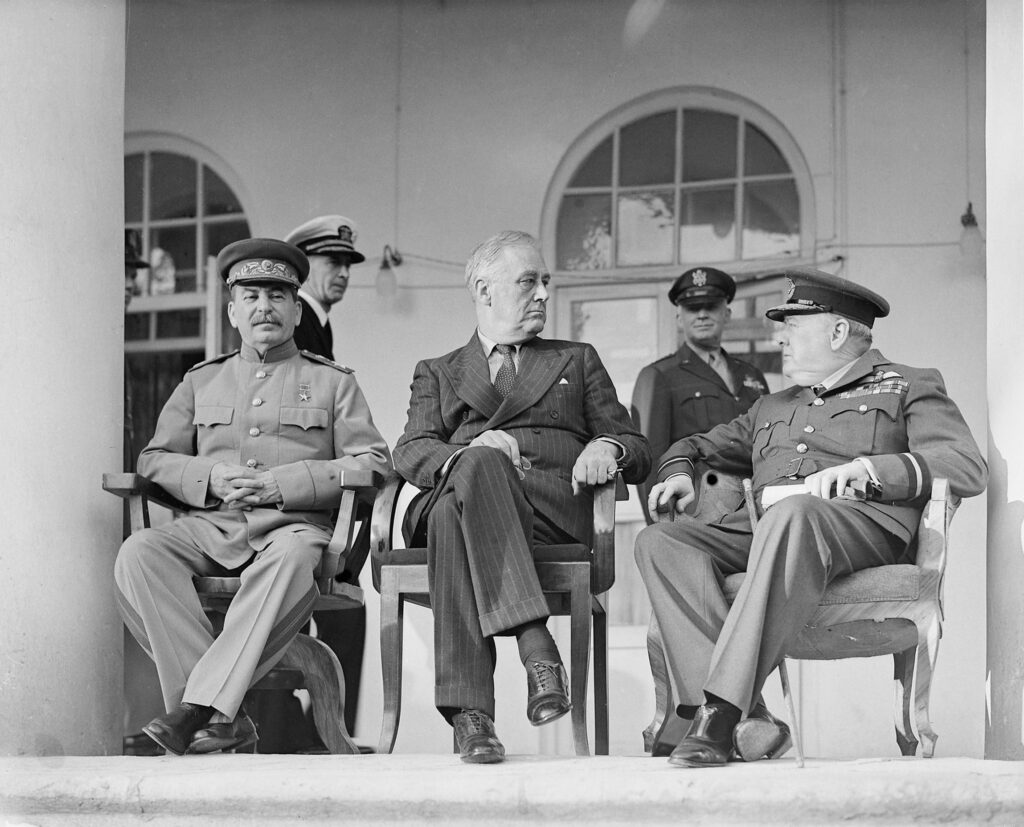
They agreed on a coordinated strategy: the Soviet Union would continue its relentless push from the east, while the United States and Britain would finally launch their long-promised invasion of Western Europe. That invasion (Operation Overlord) would open a second front and trap Hitler’s armies in a deadly corner.
The plan was clear: Soviet forces would draw the Wehrmacht deeper into the east, while the Allies struck through France, crushing Germany from both sides.
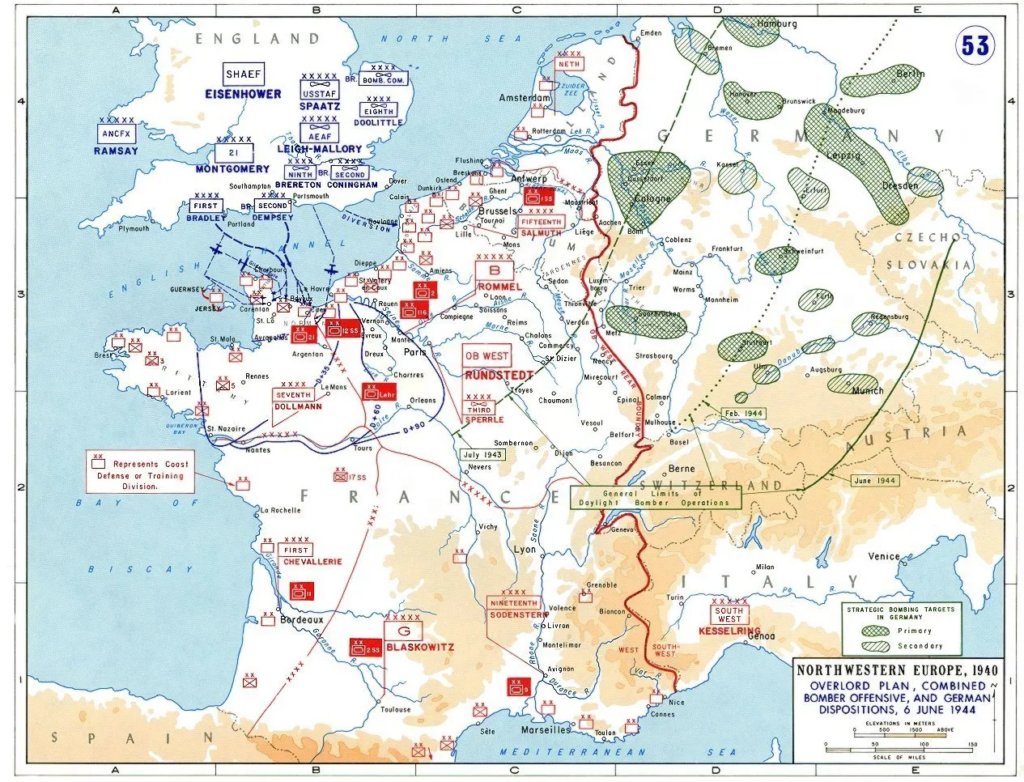
Deception campaigns were deployed to mislead Hitler’s generals about where the invasion would begin.
By June 1944, Allied forces stormed the beaches of Normandy. And from there, the noose tightened.
In the west, the Allies liberated France and drove through Belgium and into Germany. In the east, the Red Army tore through Poland and pressed into Prussia. By the spring of 1945, Soviet forces were at Berlin’s doorstep.
Hitler’s Final Days: The Führerbunker and the End of the Reich
The city was encircled. Bombarded. Starved of fuel, food, and any remaining sense of hope.
Inside the Führerbunker, buried beneath the Reich Chancellery, Adolf Hitler was unravelling.
The once-dominant figure, now a frail and trembling man, spent his final days clinging to delusions, lashing out at generals who no longer listened, and issuing orders no one could follow.
The end was clear, only he refused to see it.
On April 20, as the Soviets shelled Berlin and marked his 56th birthday with fire from the skies, Hitler sat trapped beneath the ruins of the city he once ruled. The radio lines had gone silent. Communications were broken. Most of his closest advisors had either fled or lost faith.
The Reich was in ashes.
On April 29, he dictated his last will and political testament, blaming traitors for Germany’s collapse.
That same night, in a short, strange moment of ceremony amid the chaos, he married Eva Braun.
The next afternoon, Hitler and Braun retreated into his private chamber.
The Death of Hitler and the Collapse of the Third Reich
He took a pistol to his head. She took poison. They died side by side.
His aides, following his final command, carried the bodies up the stairs into the open.
They poured petrol over them and set them on fire.
As the flames rose, so too did the last image of the Third Reich’s leader, reduced to smoke, ash, and silence.
The war that had swallowed the world was now in its final hours.
And the man who had started it all was gone.
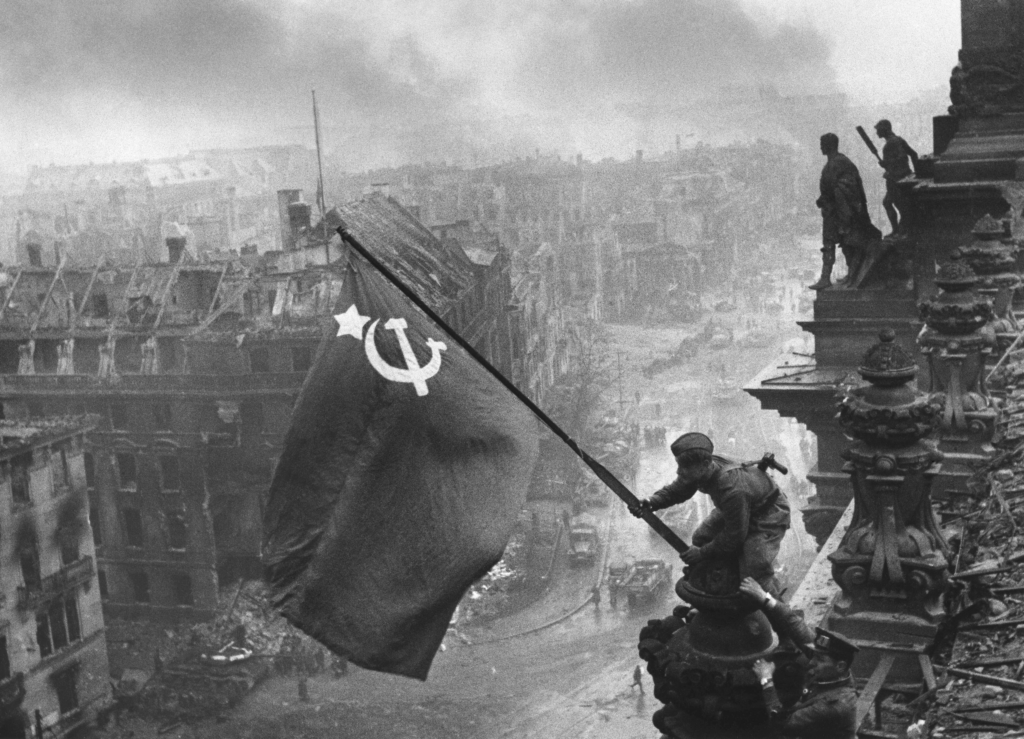
The death of Adolf Hitler marked more than just the fall of a dictator; it symbolized the collapse of a world order built on conquest and colonial ambition.
After six long years of bloodshed, destruction, and genocide, the guns finally began to fall silent.
Oil, Empires, and the Postwar Scramble for Iran
The global machinery of war ground to a halt, and with it came a breath of relief.
The war was over.
Streets filled with celebration. Soldiers embraced strangers. Civilians wept in joy and in mourning.
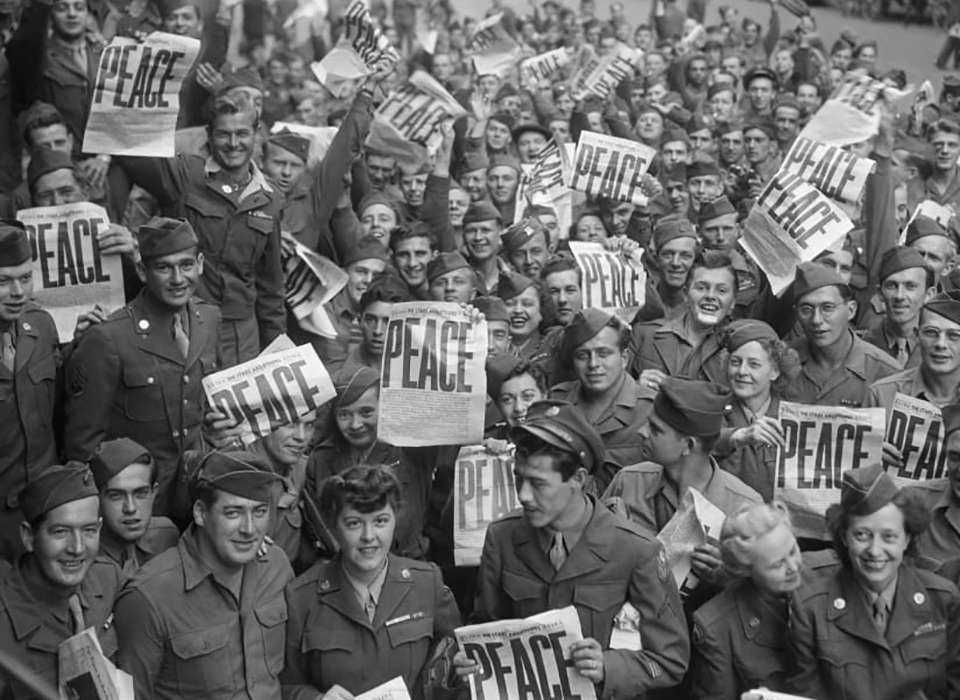
But as people around the world celebrated, there was a sense of shifting tides across the global power dynamics.
The British Empire, exhausted and indebted, was no longer the unrivalled force it had once been. In its place stood two new giants: one to the west and one to the east. The United States and the Soviet Union, now victorious allies, would soon face off in a silent, growing struggle for global influence.
World War II had also revealed something else … something essential to this new era: oil.
The war had shown the true value of petroleum in modern warfare and economic recovery.
Tanks, planes, ships, and factories all ran on it.
If the 19th century had been powered by coal and steam, the 20th belonged to oil.
And no country in the Middle East produced more oil than Iran.
Stalin Eyes Iran’s Oil: Soviet Ambitions in the Postwar Middle East
Before the war, Britain already had vast control over Iranian oil through the Anglo-Iranian Oil Company (AIOC). Now, with the war over and the world rebuilding, everyone wanted more.
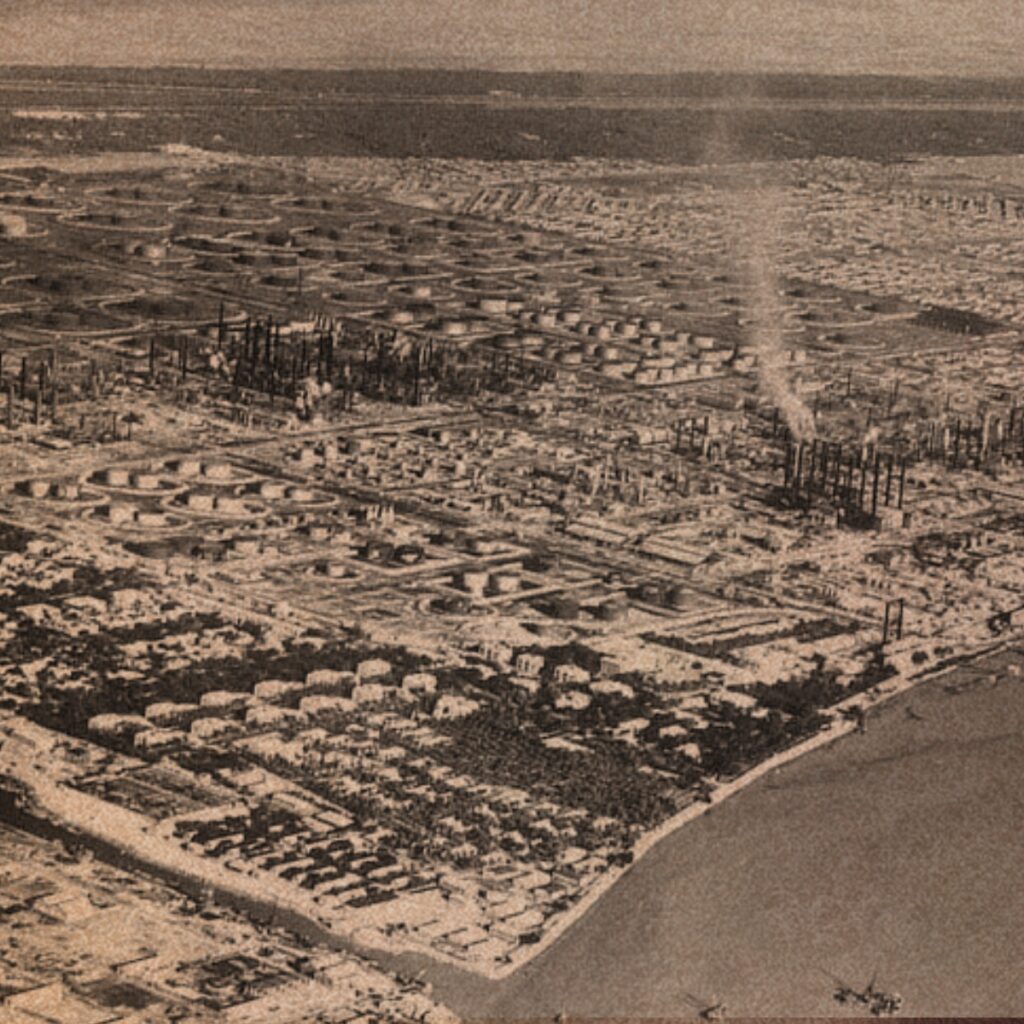
Iran, hoping to balance foreign interests and expand its revenues, began exploring new partnerships. Two American firms, Standard Vacuum Oil and Sinclair Oil, were invited to send representatives. The Anglo-Dutch giant Shell also entered the scene, eager to expand its access to Iran’s rich reserves.
And watching all of this from the north was Joseph Stalin.
The Soviet leader, who had just fought a brutal war and borne a staggering human cost, saw Iran’s oil not as a business opportunity but as the spoils of war.
Britain had its share. America was arriving. Stalin wasn’t going to be left out!
To him, postwar diplomacy was not about fairness; it was about power.
And he would stop at nothing to claim a piece of Iran’s oil-rich soil.
In 1943, the Soviet leadership sent over three hundred geologists to Azerbaijan to assess the scope of its oil reserves. The results were so overwhelming that the state recommended that Stalin negotiate an oil concession in northern Iran.
Early the next year, in February 1944, members of the 14th National Consultative Assembly were sworn into the Majlis.
With the abdication of Reza Shah, Mohammad Reza’s early leniency with freedom of speech and Iran’s political reawakening, the parliamentary elections of that year were the freest and most democratic since the creation of the Pahlavi dynasty.
Over half of the elected members were newcomers: dissidents, political prisoners, and activists who had been silenced during the reign of Reza Shah and were now finding their second wind under Mohammad Reza’s rule.
The Tudeh Party of Iran: Rise of a Marxist–Leninist Movement
One of the parties active in this period was the Tudeh.
The Tudeh Party of Iran, meaning the “Party of the Masses,” emerged as one of the most influential political organizations in Iran during the early 1940s, at a moment when authoritarian control abruptly gave way to political openness.
The party was founded by a coalition of former political prisoners, many of them Marxists, alongside European-educated intellectuals, socialists, and liberal reformers. From the outset, the party chose a broad and populist name to soften and obscure its communist character.
In a short time, the Tudeh Party developed into a nationwide organization.
By the end of World War II, it claimed tens of thousands of core members and an even larger circle of affiliates. It established branches in most major towns and cities, drawing support from intellectuals, urban professionals, and industrial workers.
Ideologically, the Tudeh Party was rooted in Marxist and socialist principles. Its program emphasized the protection of ordinary people from economic exploitation and promoted wide-ranging social reforms. It advocated universal access to work, education, and healthcare, supported women’s suffrage, and defended labour rights.
At the same time, the Tudeh Party was deeply shaped by its alignment with the Soviet Union. Its leadership showed consistent loyalty to Moscow, and its political positions often mirrored Soviet foreign policy interests.
Seeing this opportunity, Stalin moved to claim his share.
Stalin makes a claim on Iran’s oil
Stalin framed it as a policy of “positive equilibrium,” a balance to counter British dominance in the south.
Despite the Soviet Union’s break from the old Russian Empire, Stalin still believed the Anglo-Russian agreement of 1921 gave him leverage. That treaty, he thought, granted the Soviets the right to carve out a place for themselves in northern Iran.
With the Tudeh Party gaining traction in the Majlis, Stalin believed he had his opening.
He expected the Iranian parliament to comply, to approve a concession deal that would hand the Soviet Union access to northern oil.
But the mood in the Majlis had shifted.
Parliament feared a repeat of colonial submission and stood united against the proposal. They passed a law to halt all oil negotiations until the war was over and the dust had settled.
It was a blanket rule on paper, but the Soviets knew who it was aimed at.
They understood something else too: that Iran would never give them oil by choice, even when the war would be over.
So if the door wouldn’t open willingly … they would force it.
And as fate would have it, they were already well-positioned. Their soldiers were stationed in the north, waiting for orders.
You might remember that in his final act as prime minister, Foroughi had secured the tripartite agreement, which demanded that the allied armies leave Iran within six months after the end of the war.
After the Nazis were defeated in Europe and the war with Japan neared its end, Britain and the United States began pulling their forces out of Iran, well ahead of the six-month deadline they had agreed to.
But the Soviets didn’t budge from Azerbaijan.
The Azerbaijan Democratic Party: Soviet-Backed Autonomy in Iranian Azerbaijan
As mentioned in the previous seasons, the northwest province of Iran, which we call Azerbaijan, was overwhelmingly inhabited by Turkic-speaking Azerbaijanis, also known as Azeris, who were long established as the dominant local community in villages and towns and whose ancestors had become Turkicized centuries earlier while still retaining deep Iranian cultural roots.
For a country that prided itself on communist unity and saw class struggle as more important than borders or ethnic lines, the Soviet Union had never shown much interest in cultural or ethnic identities.
But in Azerbaijan, they made an exception.
Sensing an opportunity, the Soviet Politburo passed a resolution in July 1945 to create the Azerbaijan Democratic Party (ADP).
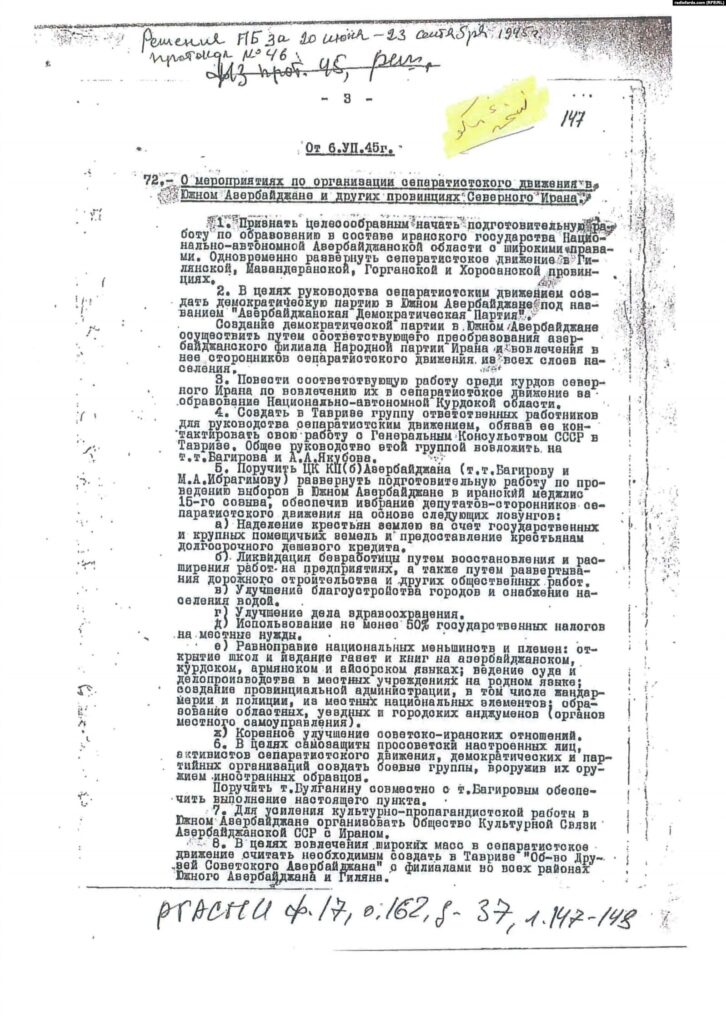
The ADP was a socialist movement … but built on ethnic pride. The party’s goals blended land reform and healthcare with a push to preserve Azeri culture, language, and autonomy. It demanded that local tax revenue stay in the province, that education be offered in Azeri, and that Moscow’s version of socialism be applied with a distinctly Azeri tone.
To consolidate power, the Soviets ordered other aligned groups like the Tudeh to halt activities and fall in line under the ADP banner, unifying the left in Azerbaijan into a single, controllable force.
Jafar Pishevari and the Azerbaijan People’s Government
And inside Iran, the party found its leader in Jafar Pishevari.
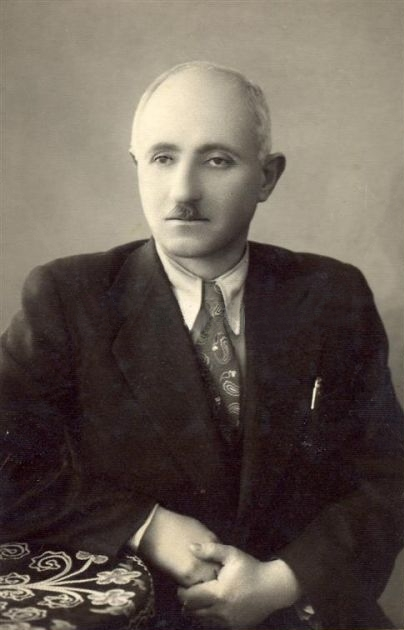
Pishevari was a leftist activist born in 1892 in northwest Iran. He became active in communist circles after spending time in the Caucasus and joining revolutionary movements in the early 20th century. He was a founding member of the Communist Party of Persia and briefly served as interior minister in the short-lived Persian Socialist Soviet Republic of Gilan in 1921, which we talked about in our first season.
After the creation of the Pahlavi dynasty, Pishevari was imprisoned under Reza Shah for his ideas. But after the king’s abdication, he was released. He was even selected to the fourteenth parliament in 1944, but the members refused to swear him in due to his separatist stance on Azerbaijan.
While this rejection could’ve been the end of his political career, it made him the ideal candidate for the ADP. And thus, he was selected as the party’s official leader.
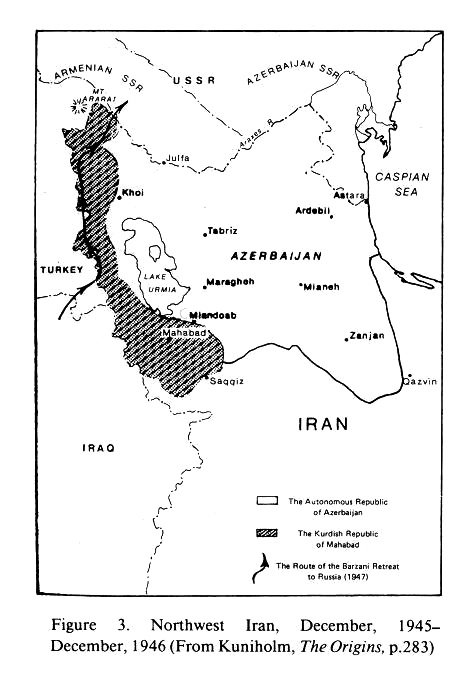
Soon, ADP took control of the entire province and began to manage Azerbaijan as an autonomous state.
They picked their own assembly, took control of the military units in the region, and were reinforced by the Soviet troops and resources already deployed.
Initially, ADP leaders repeatedly denied that they sought outright separation from Iran. But their actions signalled a desire for extensive self-rule.
They removed Pahlavi monuments.
They started revamping their education system.
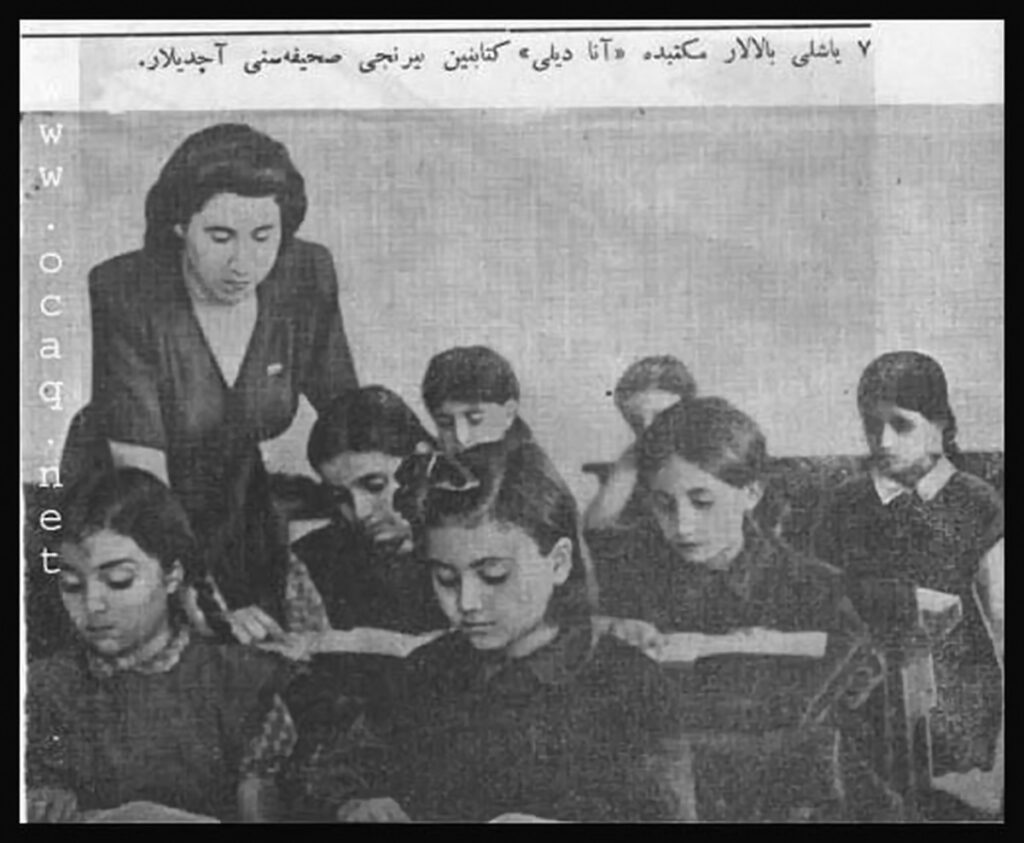
And with the help of the Soviet Union, they established a propaganda campaign pushing a new Azeri identity.
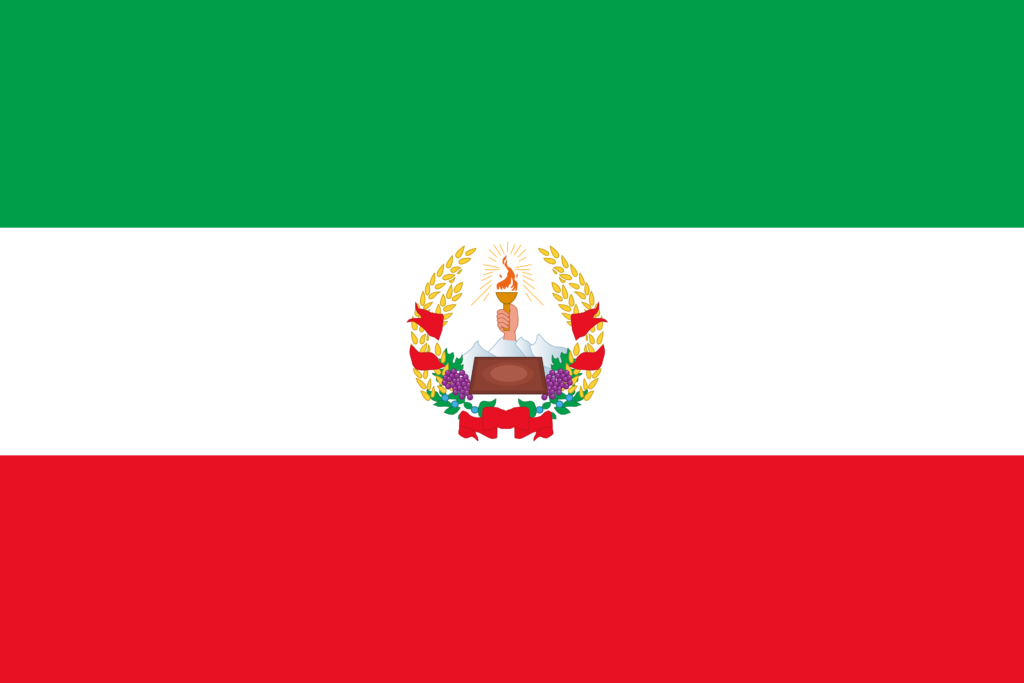
They even issued a new flag for the province … and began calling themselves the Azerbaijan People’s Government.
Iran’s Azerbaijan Crisis of 1946: Tehran Fights Back
While in the northwest, the Soviets were busy soft-carving one of Iran’s biggest provinces, the Tudeh Party in Tehran began echoing the separatist movement’s demands.
The Tudeh faction in the parliament called the movement a democratic initiative. They demanded that the government negotiate with the ADP, and their members began organizing protests in the streets in support of their Azeri brothers.
The sentiment didn’t stay contained for long.
It began to find supporters in other parties as well.
Soon, a growing number of MPs began backing the idea of a “semi-autonomous” Azerbaijan.
Ebrahim Hakimi, the prime minister at the time, was having none of it.
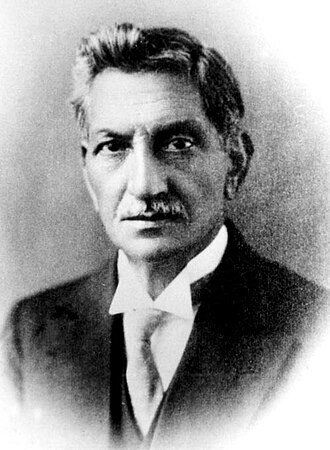
He firmly believed that despite the Soviet propaganda campaign, the Iranian population, including the Azeris, had always seen themselves as part of a larger, unified identity. Just like how communism had united nations under Soviet control, the Iranian identity united the many ethnic and racial groups that lived in this country.
But belief wasn’t enough.
There was little he could do.
Hakimi filed an official complaint with the newly founded United Nations in January 1946.
And then, under pressure from the Tudeh Party and Soviet influence, resigned from office.
The young Shah was now left with the impossible task of choosing a new prime minister … one who had to navigate a crisis that was growing more dangerous by the day.
One wrong move, and Mohammad Reza would forever be known as the king who broke Iran.
Feeling that pressure, few were bold enough to even consider the job.
Luckily for him, there was one man who was daring enough to go into the storm with him.
Ahmad Qavam: The Master Diplomat Who Saved Iran
Qavam was always known as the perfect politician. Smart. Kniving. Devious.
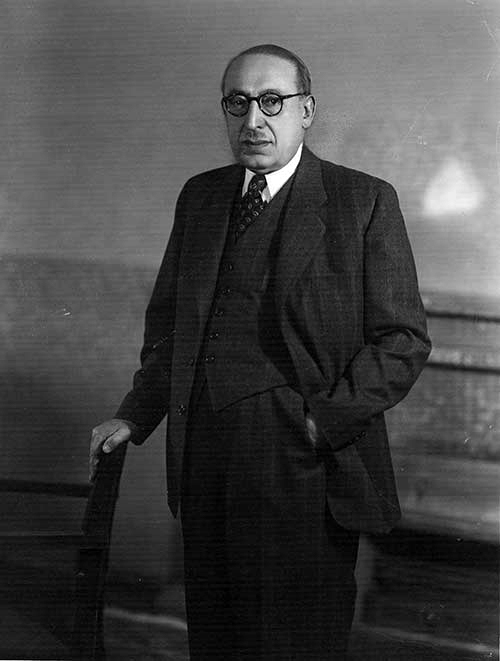
Ahmad Qavam, also known as Qavām al-Saltaneh, meaning Strength of the Monarchy, was an influential Iranian politician of the late Qajar era.
He was born in 1877 in Tehran and entered government service at a young age, first at court and later as Nasir al-din Shah’s personal secretary.
During the constitutional revolution of 1905, he was the liaison between Mozaffar al-Din Shah and the constitutionalists and the principal drafter of the Constitutional Decree of 1906.
In 1921, after initially being imprisoned during the coup led by Seyyed Zia, he was released and appointed prime minister by Ahmad Shah. His first term focused on suppressing regional revolts and restoring sidelined politicians. Qavam served a second term as prime minister in 1922–1923, marked by efforts to reform Iran’s finances with American advisers and by intense conflict with Reza Khan, then minister of war.
When Ahmad Shah feared Reza Khan’s growing influence, he believed only Qavam possessed the political power necessary to keep the minister of war in check, so he picked him as his prime minister.
But Reza Khan, recognizing that Qavam was the final obstacle to his absolute control, ordered the military police to arrest him on the fabricated charge of conspiring to murder him and got him banished from the country. A story that we explored in the final episode of book one.
In February 1925, Hassan Moddares requested that Reza Khan facilitate the return of exiled politicians, including Qavam al-Saltaneh, but Qavam, seeing the growing autocratic tendencies of Reza Shah, stayed out of politics.
Now, two decades after Qavam clashed with his father, Mohammad Reza was in need of his help in solving the tangled situation in Azerbaijan.
Qavam’s Moscow Gambit: Running Down the Clock on Soviet Occupation
Qavam had mastered the art of building alliances, even with his enemies.
He was great at improvising and didn’t fear a bit of dishonesty to get things done.
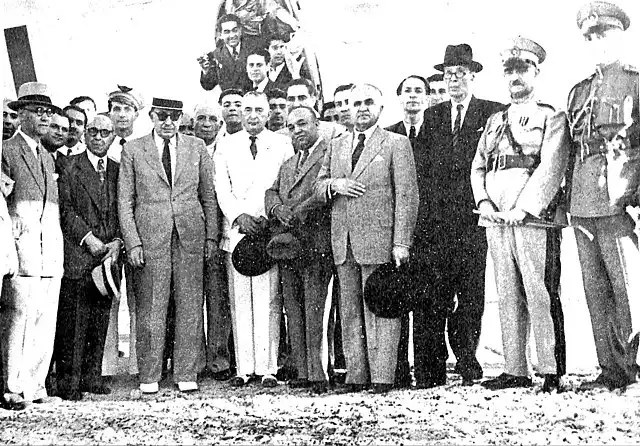
Coming from Qajar nobility, he understood the importance of Azerbaijan all too well.
And he had one card at his disposal: the Tripartite Treaty signed by Mohammad Ali Foroughi.
That agreement between the Allied powers and Iran upheld the country’s independence and required all foreign troops to withdraw no later than six months after the end of the Second World War.
After the capture of Berlin and the death of Hitler, the war continued in the Pacific until the United States dropped atomic bombs on Hiroshima and Nagasaki, accelerating Japan’s decision to accept unconditional surrender, which was signed aboard the USS Missouri on September 2, 1945, an act that formally ended the global conflict.
Which meant the Soviet Union was now obliged to leave Iran by March 1946.
So Qavam played his hand.
All he had to do was act as if his government was genuinely interested in a deal with the Soviets and the ADP, and stall until the deadline. Then, he could turn the Soviet presence in Iran into an international matter and let the superpowers face off against one another.
To appease the Russians, Qavam did the opposite of what most expected.
He gave the Tudeh Party more room to operate … even brought some of their members into his cabinet.
He signalled interest in discussing autonomy in Azerbaijan.
And he reopened talks about oil.
Qavam vs. Stalin: The High-Stakes Showdown in Moscow
Then, in February 1946, with just a month left on the Tripartite clock, he travelled to Moscow.
As we mentioned earlier, the previous prime minister had filed a formal complaint with the newly formed United Nations about Soviet occupation. That had triggered Stalin.
The Soviet military presence near Azerbaijan grew larger, and their embassy issued a sharp warning:
They feared for the lives of their stationed personnel. And they viewed Iran’s appeal to the UN as a hostile act … one that could carry “severe consequences.”
So when Qavam arrived in Moscow, the stakes were high.
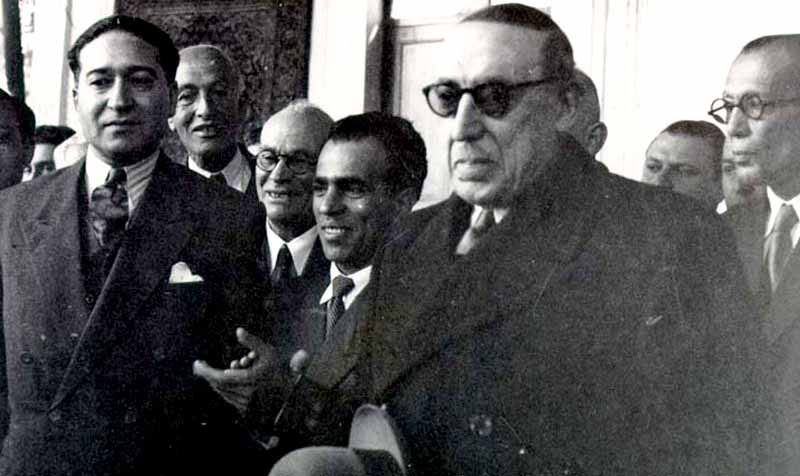
He needed to cool tensions without making any firm commitments.
In his first meeting with Stalin, the Soviet leader played an aggressive game.
He complained that Britain had full access to Iran’s oil, while the Soviets were being ignored.
Stalin accused Tehran of betrayal … of failing to honour its alliance with the North.
He demanded that Qavam correct this course.
Qavam offered a compromise: he’d bring the Soviet oil deal to the Majlis for a vote …
But only if the Soviet Union agreed to withdraw its forces from Iranian territory.
Stalin refused.
Qavam Outfoxes Stalin: A Diplomatic Win for Iran
Still, by the end of his visit, Qavam had pulled off two major wins:
First, he convinced Stalin to ease his pressure. The Soviets agreed to scale back their troop numbers and replace demands for full oil concessions with a 50/50 joint venture in Azerbaijan.
Second, Qavam managed to convince Stalin that he was a genuine ally.
The Soviets believed he was actually committed to a mutual solution.
What they didn’t know was that Qavam was simply running down the clock … buying time until he could deal a final blow to Soviet oil ambitions in Iran.
And as he boarded the train to return to Tehran, the international dynamics were shifting once again … This time in his favour.
From Roosevelt to Truman: How U.S. Soviet Policy Changed Everything
Towards the end of the Second World War, Franklin D. Roosevelt’s strategy for dealing with the Soviet Union was based on cooperation and accommodation.
FDR assumed that Joseph Stalin’s behaviour was largely driven by security fears after repeated invasions of Russia, and he believed those fears could be managed through diplomacy, economic engagement, and inclusion in a new international system, especially through the newly formed United Nations.
He was willing to tolerate Soviet influence in Eastern Europe so long as the USSR participated in collective security and avoided direct expansion beyond its sphere, aiming to personalize diplomacy and trusting that dialogue and mutual concessions would keep rivalry contained.
This approach was cut short in April 1945, when Franklin D. Roosevelt died early in his fourth term, leaving the postwar settlement incomplete and its assumptions untested.
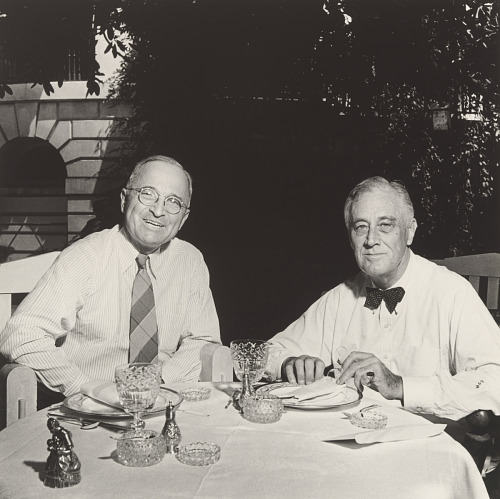
Harry S. Truman, who succeeded him with limited experience in foreign affairs, initially tried to carry forward Roosevelt’s cooperative framework, but his outlook shifted as events unfolded.
Unlike FDR, Truman had less faith in personal diplomacy and grew increasingly skeptical that Soviet actions were defensive rather than ideological.
Stalin’s 1946 Speech, the Long Telegram, and the Origins of Containment
Then on February 9, 1946, only days before Qavam’s trip to the Soviet Union, Stalin gave a speech in Moscow that reaffirmed all of Truman’s fears.
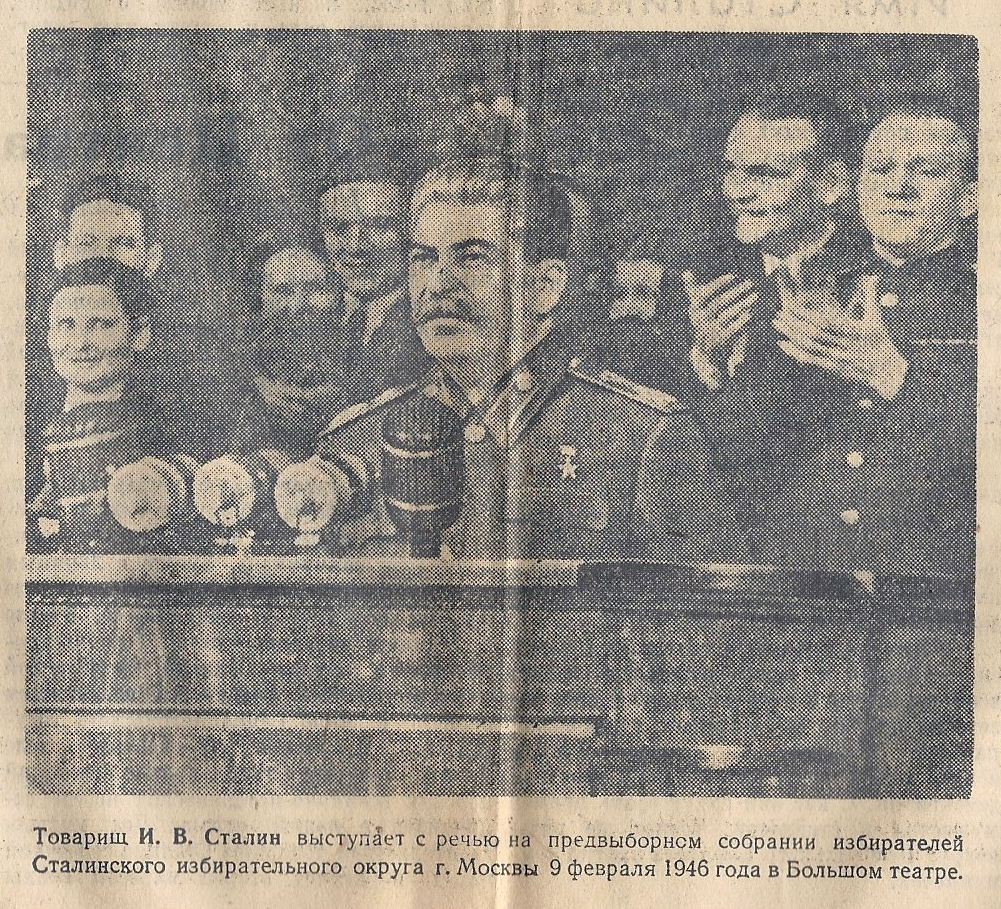
In the address, Stalin celebrated the Soviet victory, portraying the Red Army’s success as proof that the Soviet social and political system had proven superior and more stable than rival systems. He argued that the wartime test showed communism to be viable and triumphant.
Stalin emphasized that the “capitalist world was destined to split into hostile camps”, and violent struggle would continue so long as capitalism prevailed.
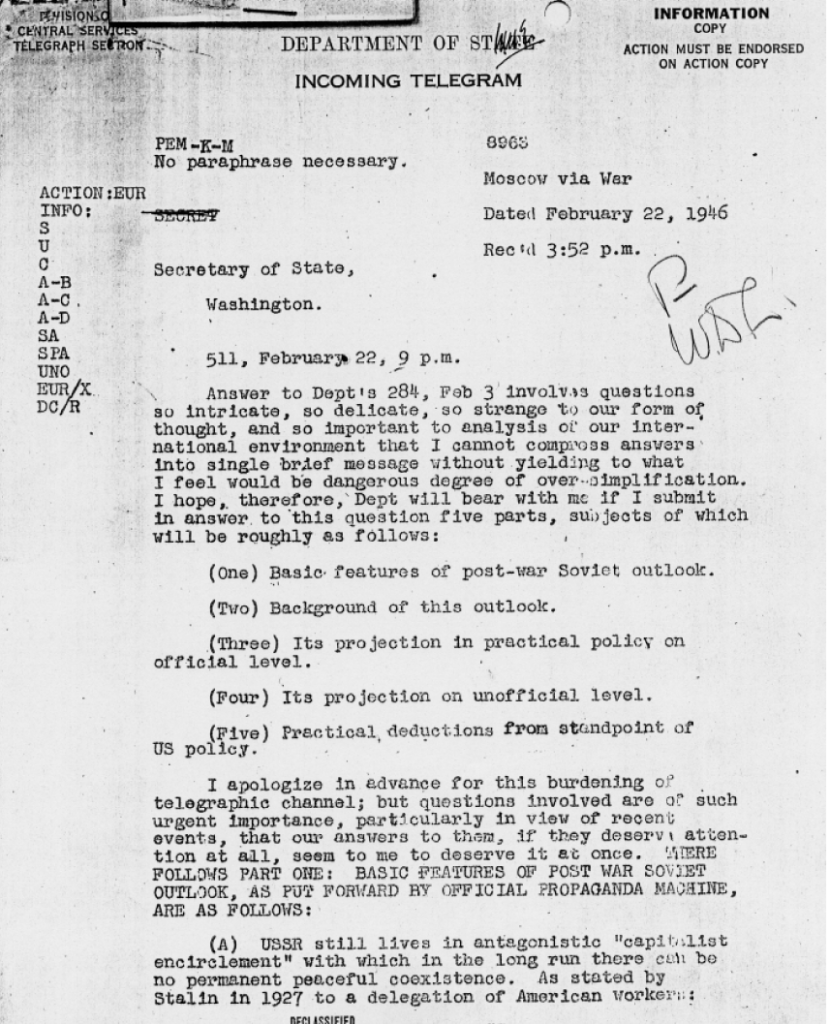
In the aftermath of this speech, George F. Kennan, serving as chargé d’affaires at the American embassy, was asked to explain recent Soviet behaviour and sent back what became known as the “Long Telegram.”
This confidential cable, consisting of more than 5,000–8,000 words, laid out his deep analysis of the Soviet Union and its motives. Kennan argued that Soviet leaders saw the world as divided between incompatible systems and believed the West would always be hostile, a view shaped by a mix of Marxist-Leninist ideology and historic Russian insecurity.
He described Soviet foreign policy as inherently suspicious and expansionist but also cautious and patient, willing to advance where resistance was weak and pull back where it was strong.
Based on this, he concluded that the United States should not expect durable cooperation with the Soviets, nor should it appease them; instead, Washington should resist Soviet influence consistently but without provoking direct war.
Iran and the Cold War: The Truman Doctrine Finds Its First Test
This framing of war as an inherent consequence of capitalist economics and politics suggested that, despite what FDR hoped, peaceful cooperation between the Soviet Union and Western capitalist states could not be assumed and that the conflict between capitalism and communism was inevitable.
The telegram became the intellectual foundation for U.S. post-war policy, shaping the Truman Doctrine, the Marshall Plan, and the broader strategy of containment that dominated American foreign policy for decades.
The very next month, Winston Churchill, now the dismissed Prime Minister of Britain, who was in the United States at Truman’s invitation and giving a speech at Westminster College in Fulton, Missouri, echoed the very same statements.
Stalin’s speech. The Long Telegram. Churchill’s warning.
Each one paved the path for Truman’s new approach to Soviet policy: containment.
At the heart of containment was a simple belief: That the Soviets didn’t seek war with the West, but relied on strategy, ideology, and propaganda to stretch their sphere of influence. That communism spread not by force, but by feeding off political chaos, economic despair, and fragile states.
So the U.S. would counter it the same way; not by trying to destroy it outright, but by stopping its spread wherever it surfaced.
And right then, Soviet expansion in Iran became the centre of global politics.
The Cold War was casting its first light across the world…
And Iran was where that light first struck.
U.S. and British Pressure Forces Stalin’s Hand Over Iran
In support of Iran’s original complaint to the United Nations, the American delegation took a stand.
They worked closely with the Iranian government, pushing to bring the Iranian crisis of 1946 to the global stage and put pressure on Stalin.
Seeing the American pivot, the British followed.
At first, they hadn’t cared much about Soviet activity in the north.
But now they feared the rise of Tudeh, an ideology capable of igniting strikes and protests inside AIOC itself. The more power Tudeh gained in Tehran, the more fragile Britain’s grip on Iranian oil became.
With two superpowers now behind him, Qavam finally had the leverage he needed.
Everything was in place.
And it was time to make a move.
Qavam’s Final Offer: The Deal That Got Soviet Troops Out of Iran
Qavam’s proposal was simple.
The Soviets would withdraw their forces, and in return, Qavam would agree to the formation of a joint Soviet–Iranian oil venture, which he promised to bring before the Majlis for a vote.
He also told Pishevari, the leader of the ADP, that he was willing to recognize Azerbaijan’s local parliament.
The province’s governor would still be appointed by Tehran, but chosen from a list pre-approved by the ADP. Most of Azerbaijan’s taxes would remain in the province. And Azeri would be formally recognized as an official language in the region.
This way, Stalin would get his version of oil concessions.
Pishevari would get his semi-autonomous state.
And Iran would stay intact.
Under pressure from the United States, Stalin knew this was the best deal he was going to get.
In Azerbaijan, Pishevari warned Moscow that Qavam could not be trusted. That the deal would backfire. And when it does, it wouldn’t be Tehran or Moscow paying the price … it would be the ADP.
But Stalin believed Qavam.
And if access to Iran’s oil came at the cost of Azerbaijan’s autonomy… well, that was a price he was willing to pay.
The Majlis Vote That Buried Soviet Oil Ambitions in Iran
A new Soviet ambassador was dispatched to Tehran.
The final agreement was reached:
The Red Army would exit Iran exactly six months after the war’s end.
And Qavam’s government would present the Iranian–Soviet Oil Company (ISOC) to the Majlis for a vote.
The Soviets remained true to their promise. On March 24, their forces left Iran.
Now, it was Qavam’s turn to uphold his end of the deal.
The northern superpower warned him to stay true to his word.
He reassured them that he would.
And he did … technically.
He had promised to put the oil proposal to a vote in parliament … But he had never said anything about how the vote was going to turn out!
As one of its first acts, the newly seated Majlis rejected the Soviet oil agreement by a staggering vote of 102 to 2.
One of the most unified decisions in the chamber’s history.
The Russians were furious.
But they couldn’t do a thing.
They had no troops left in the country.
Turned out, Pishevari had read Qavam far better than Stalin ever did.
The Collapse of the Azerbaijan People’s Government: December 1946
As for the ADP, their downfall came just as swiftly.
Like Hakimi before him, Qavam knew the truth behind the propaganda. The Azerbaijan People’s Government didn’t represent the majority of Azerbaijanis. It had no broad support. Just a loud minority propped up by Soviet backing.
And now that the Red Army was gone, that bubble had burst.
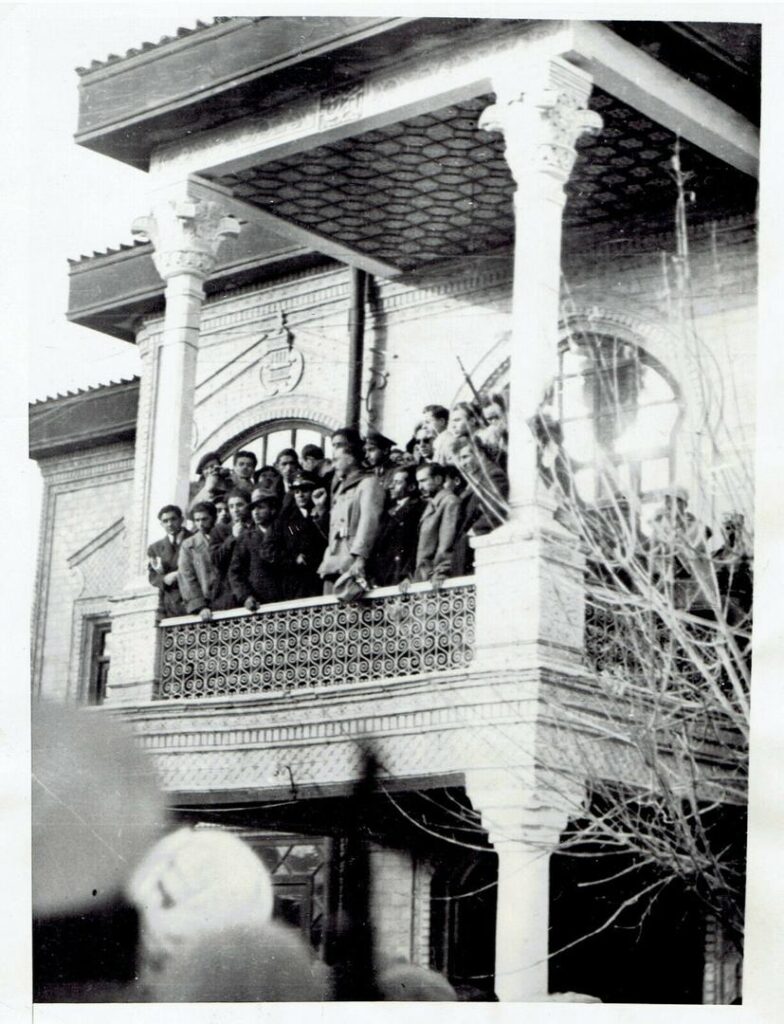
The Shah issued a direct order for immediate action to crush the rebellion in the north.
“We must perform our patriotic duty now. We therefore command our armed forces to march forward to Azerbaijan, to break down the resistance, and to raise the lion and the sun flag in every corner of this dear land.”
Without Moscow to shield them, ADP fighters didn’t last long.
The army swept through the province. And on December 13, 1946, the Shah entered Tabriz, not as a visitor, but as a monarch reclaiming his land.
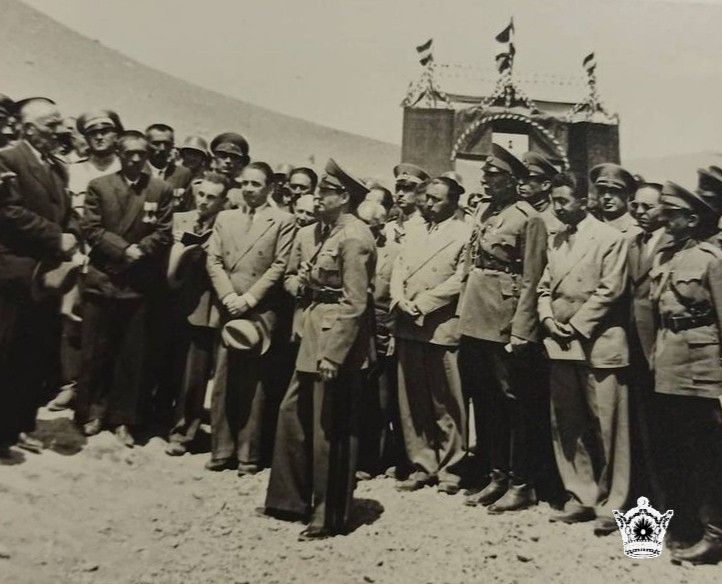
For the young monarch, standing front and center boosted both his confidence and his popularity. It echoed Reza Khan’s resolve, without the baggage.
This was the moment he could finally claim the throne with certainty. The moment he truly became the king of Iran.
Pishevari’s Exile, Qavam’s Fall, and the Shah’s Stolen Glory
With the province back under full government control, Pishevari had no choice but to flee.
He escaped to the Soviet Union, where he spent his final year bitter and broken.
Constantly complaining about his treatment and accusing the Russians of betraying the Azerbaijani cause.
A year later, he died in a mysterious car crash in Baku.
As for Qavam, Once the Azerbaijan crisis ended and the Soviet oil deal was buried, the Shah no longer had use for him.
Qavam’s strategy had saved the country from splitting apart. But his methods had left him alone.
The Soviets loathed him for the betrayal. The conservatives despised him for empowering the Tudeh. The left viewed him as a traitor who sold out the revolution. And the Shah feared sharing the spotlight with him.
That Qavam would be remembered as the man who saved Iran, not the king.
He had lost his mandate. With no allies left, Qavam stepped away once more, only to return years later, during one of the most explosive chapters in Iran’s political history.
But that’s a story for another episode.
Qavam had outmaneuvered Stalin and kept Iran whole. But when the dust settled, it was the Shah who took the credit. It was he who emerged as the hero the nation had been waiting for.
Yet while the Soviet threat had been pushed back, one superpower still held a firm grip over Iran’s most vital resource.
And now, with attention turning away from the north, the vast oil fields of the southern provinces moved to the center of Iran’s political future



One Response