
This is the transcript for Book Three, episode 3 of The Lion and the Sun podcast: New Friends. This episode talks about the 1949 Shah assassination attempt, its aftermath, and how it led to expanded royal power and a pivotal US visit that reshaped Iran’s future.
Listen to this episode on Apple Podcasts, Spotify or all other podcast platforms.
February fourth, 1949. Tehran University.
The young monarch, Mohammad Reza Pahlavi, had spent the better part of the decade attempting to steady a throne inherited in turbulence. The war years had passed, foreign armies had withdrawn, and despite ADP’s best efforts, the country had stayed united and intact.
On that afternoon, the Shah prepared for what was meant to be a moment of celebration.
His black limousine cut a deliberate path through the avenues leading toward the campus of the University of Tehran. The university stood not merely as an institution of learning but as a symbol of modern statehood.
During the reign of Reza Shah Pahlavi, the government took deliberate steps to unify and expand higher education. In the early 1930s, figures within the Iranian government and academic community began studying how to create a national university that could bring together fragmented colleges into a single comprehensive institution. Architects from Iran and Europe were involved in designing the campus, and by 1934, the Majlis had formally established the University of Tehran as the first modern university in the country, and the institution was inaugurated with faculties in fields such as medicine, law, science and engineering.
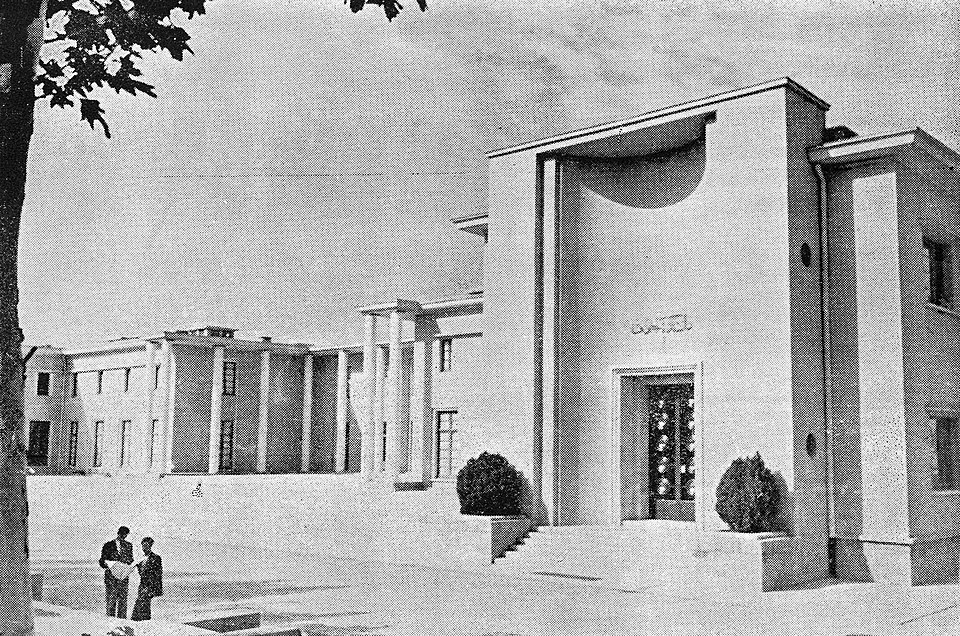
Through the years, the Faculty of Law had come to represent the monarchy’s vision of Iran. A state shaped by codified statutes rather than ancient clerical authority.
It was there that a ceremony awaited the young shah.
The 1949 Assassination Attempt on Mohammad Reza Shah
Students had gathered in neat rows. Professors in dark overcoats stood beneath the building’s façade. Officials adjusted their collars and exchanged words of protocol. There, they awaited to celebrate the anniversary of the institution with Iran’s highest-ranking official.
Shortly after one o’clock in the afternoon, the limousine slowed and came to a halt.
A palace guard opened the rear door.
The Shah emerged into the light.
He paused only briefly before walking toward the faculty steps, acknowledging the restrained applause with a composed nod. His stride was measured, unhurried. One of a confident leader.
Near the front steps, a section had been reserved for members of the press. Cameras hung ready. Notebooks rested open in gloved hands.
Among the cluster of journalists stood a man who had positioned himself carefully.
He watched intently as the Shah approached, his distance shrinking with every deliberate step.
At first, it seemed like he was trying to find a clearer frame. But instead of adjusting his lens, the man drew a small revolver from within his equipment.
The first shot rang out with a violence that shattered the ceremony’s composure.
Gasps turned to screams. Guards reacted in confusion.
The attacker fired again, and again, and again in rapid succession. Five shots were discharged in the space of seconds.
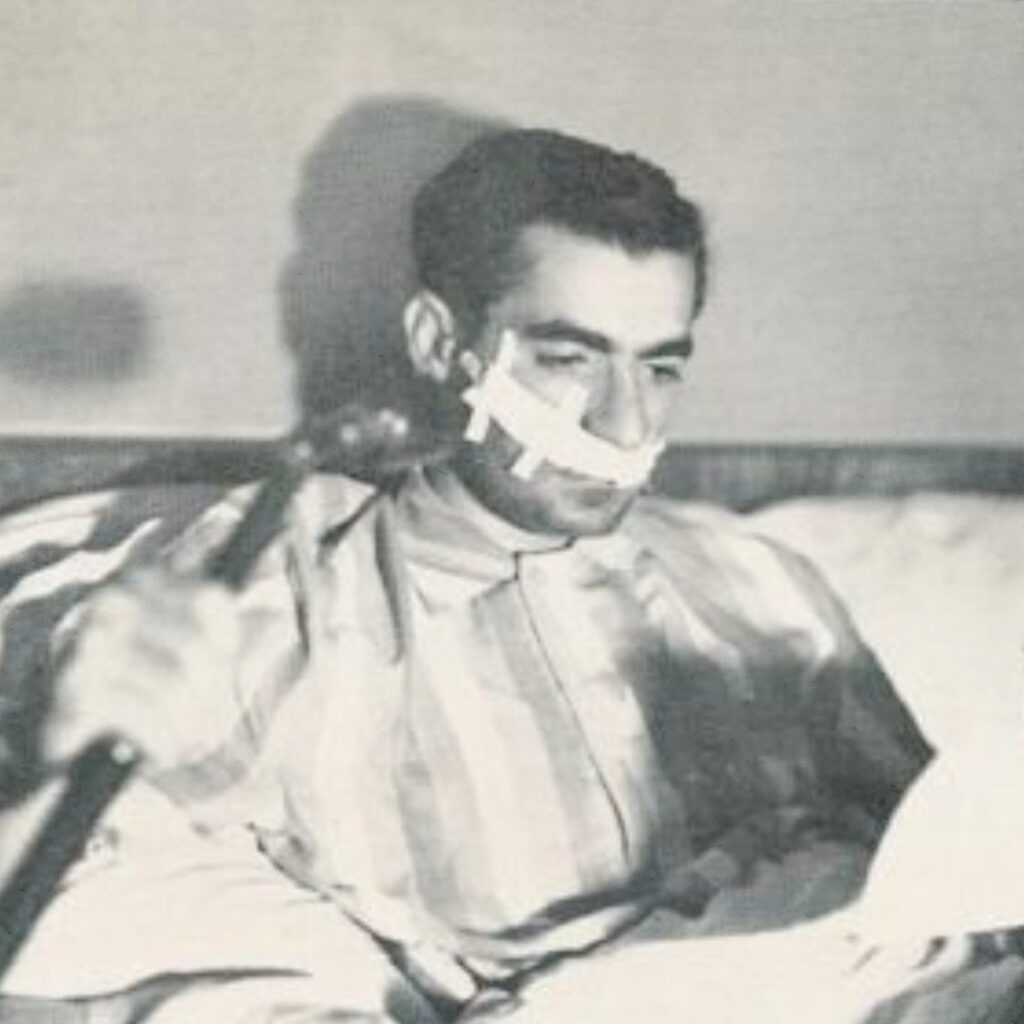
One bullet tore through the Shah’s lower lip and cheek, staining his collar with blood. Another struck near his shoulder.
The assassin adjusted his aim towards the king’s body. Then came a hollow click.
The sixth round failed.
Before the assailant could regain control of his weapon, officers lunged at him.
A rifle was fired at close range. Within moments, the assassin lay wounded on the university grounds.
The Shah, though injured and bleeding, remained conscious. Eyes open towards the sky.
How the Shah Survived and How Iran Reacted
Within hours of the attack, martial law was declared in Tehran. An emergency session of the Majlis convened under the shadow of what was described as a coordinated assault on the state. Authorities spoke of communist agitation and religious extremism converging against the throne. Arrests began that very night.
Hundreds were detained.
Offices were sealed.
Newspapers fell silent under tightened censorship.
But despite the chaos, one fact remained clear: the shah was alive.
A bullet had pierced his lower lip and cheek, and another struck near his shoulder.
The wounds were visible, but not mortal.
Conscious and speaking, he was rushed to a hospital in Tehran, where surgeons worked quickly to treat the facial injury and tend to the shoulder wound.
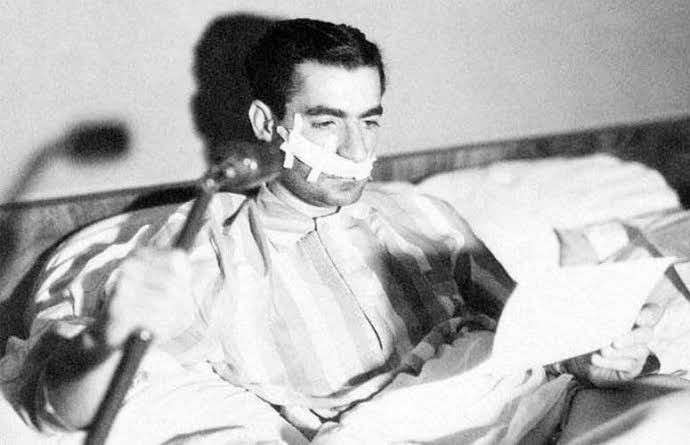
His voice, steady but strained, thanked the public for its concern and framed the day not as a moment of weakness but as an endured test.
Newspapers soon printed photographs of him in a hospital gown, cheek bandaged, eyes alert. Messages of sympathy arrived from abroad.
The Shah had already earned public support for the way he handled the Azerbaijan crisis. But now, the image of a wounded yet unbroken monarch sent his popularity soaring.
Messages of support poured in. Political factions that had spent years attacking one another suddenly stood behind the crown. Even the clergy moved closer to the throne.
Ayatollah Borujerdi, one of the most influential religious figures of the time, wrote a firm letter of support, praying, “May God Almighty preserve his kingdom.”
For a brief moment, the tension that had defined the relationship between Reza Shah and the religious establishment seemed distant.
Whatever friction had existed in the father’s era, the son had (at least for now) softened it.
Who Was Nasser Fakhr-Arai? The Man Who Shot the Shah
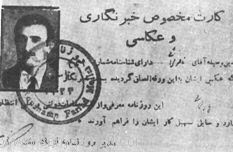
The man identified as the assailant was Nasser Fakhr-Ara’ee. An Iranian who had obtained a press credential, allowing him to stand among reporters and photographers.
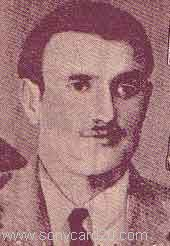
Reports described him as someone whose connections brushed both radical Islamist circles and individuals linked to the Tudeh Party.
Fakhr-Ara’i had not acted on impulse.
He had been planning the assassination for years. He had tried at least twice before to get close enough to the Shah but failed to find the right moment; until the Shah’s visit to Tehran University.
Later investigations indicated that the revolver he used had reportedly been supplied by a childhood friend with stronger militant ties to Tudeh.
In the aftermath, the Tudeh Party, already viewed with deep suspicion as a pro-Soviet force, was officially banned.
Its offices were sealed.
Its assets were confiscated.
Around two hundred of its leaders were arrested in a sweeping crackdown.
Press censorship tightened immediately.
Left-wing newspapers were shut down.
Nationalist publications were restricted.
Martial law regulations expanded.
But that was not all.
How the Shah Consolidated Power After the 1949 Assassination Attempt
After reclaiming Azerbaijan and surviving the assassination attempt, the Shah’s popularity rose.
He had public sympathy.
He had political capital.
If he ever wanted to shape Iran in his own image, this was the moment.
When Mohammad Reza first came to power, he had inherited a country in crisis. Foreign troops on its soil. Political chaos. Economic hardship. To survive, he had leaned on institutions: the Majlis, the press, political parties.
He needed them to steady the throne.
But deep down, he shared his father’s instinct.
He believed Iran needed a firm hand to drag it into modernity.
Those endless debates in parliament, party rivalries, and public criticism were slowing the country down. Holding it back.
Now, with his position strengthened, he began taking back the authority he had once allowed others to exercise.
The 1949 Constituent Assembly and Expansion of Royal Powers
In book one, we talked about Iran’s constitutional revolution.
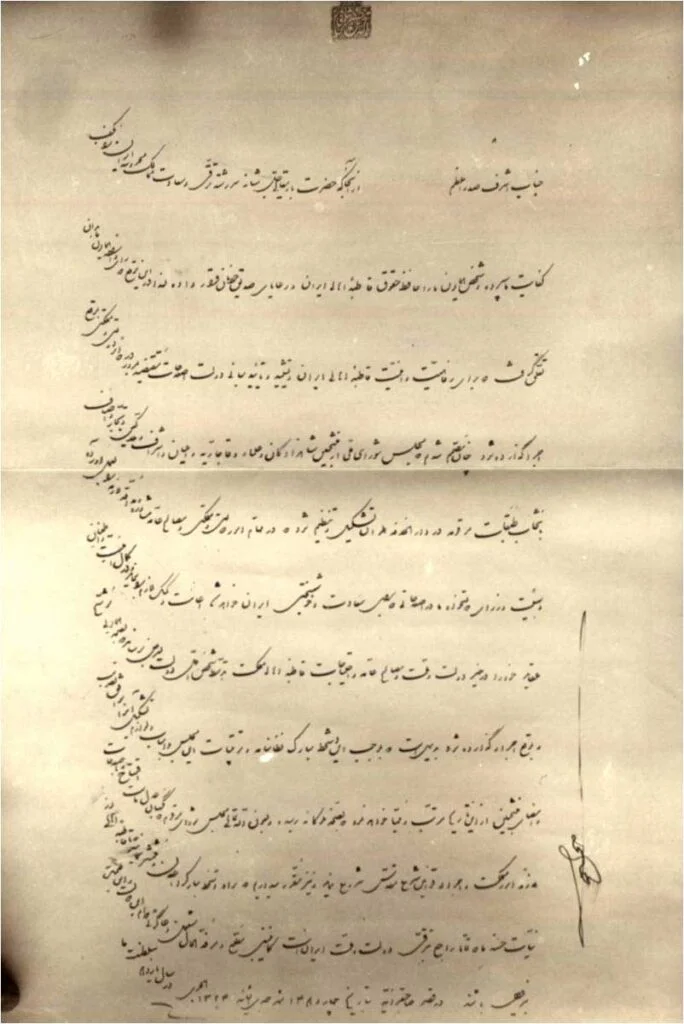
The revolution of 1906 was a sweeping popular movement that forced the Qajar monarchy to accept limits on its power. After months of unrest and protest, Mozaffar al-Din Shah signed the decree establishing a constitutional system and creating the Majlis as a national parliament.
But there was a catch: The original constitution document had envisioned more than just one chamber.
It had called for a bicameral legislature: an elected Majlis and a Senate of sixty members.
Thirty senators would be appointed by the Shah. Thirty would be elected.
And any legislation would require approval from both chambers to get passed as law.
On paper, it created balance: popular representation alongside royal authority.
In practice, it was too ambitious for a country just beginning its experiment with parliamentary rule.
So the Senate was never formed.
After Mozaffar al-Din Shah died in 1907, the effort faded.
Governments postponed it.
Constitutionalists opposed it, fearing it would become a tool of aristocratic and monarchical control.
Through the rest of the Qajar period and even under Reza Shah, the Senate remained dormant.
Now the young king saw that long-ignored constitutional clause as something else entirely.
Not a balance.
A lever.
Creation of the Senate of Iran
To him, the Senate was the missing piece. The mechanism that would allow him to rise above parliamentary friction and steer the country without obstruction.
Riding the wave of his renewed popularity, the Shah called for a constituent assembly to amend the constitution and finally activate the dormant provision.
The upper house would be created at last. A Senate to “complement” the Majlis.
But this Senate would not be neutral.

Half of its members would be appointed directly by the royal court. And through that half, the Shah would hold decisive influence over legislation.
At the same time, he secured for himself the authority to dissolve the Majlis whenever necessary. He also shortened its term from four years to two. A move that weakened the lower chamber and strengthened the crown.
But the most important change he made was changing the way prime ministers were appointed.
Under the constitution, the Majlis chose the prime minister, and the Shah gave his assent. Now the system would work the other way, with the Shah choosing and the Majlis voting afterward to confirm or reject his nominee.
All of this was a careful consolidation.
Legal.
Procedural.
Wrapped in constitutional language.
But unmistakably a power grab.
And as Mohammad Reza Shah tightened his grip at home, he prepared to step onto the world stage.
For his first major international visit as king, he chose the United States.
Iran and the United States in the 1940s: From Wartime Cooperation to Early Cold War Alignment
Ever since the Tehran Conference, the relationship between the United States and Iran had been steadily growing.
In Episode One, we talked about how Franklin D. Roosevelt saw Iran almost as a social laboratory:
A place where modernization and reform could be tested and proven.
He believed that, just as the New Deal had stabilized America, similar missions could bring political, social, and economic stability to Iran.

That belief soon turned into action.
The Americans sent military advisers. Agricultural experts. Engineers. Specialists to help with food supply and infrastructure. And then … they sent back a familiar face.
Arthur Millspaugh’s First Mission to Iran (1922)
You might remember Arthur Millspaugh from our previous season.
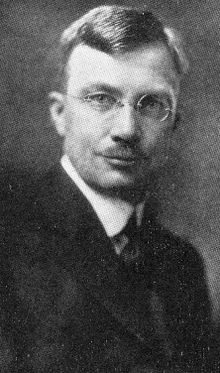
Arthur Millspaugh was a U.S. State Department adviser who first arrived in Iran in July 1922, hired by the Majlis to reorganize the country’s finances.
At the time, Iran was facing deep budget shortfalls and weak revenue collection. So Parliament gave him unusually broad authority: No spending decision could move forward without his approval.
Millspaugh introduced more systematic tax policies, drafted clear annual budgets, and worked to remove long-standing exemptions that had drained state revenue.
For a time, government finances became more structured and less chaotic.
But when Reza Shah consolidated power, that balance shifted.
A major conflict emerged over military spending.
The Shah wanted most of the oil revenues funnelled into expanding the army. Millspaugh warned that pouring resources into the military would strain the country’s finances in the long run.
Eventually, Millspaugh resigned and left Iran … becoming the second American financial adviser whose mission had ended prematurely, after William Morgan Shuster.
Then came 1941.
After the Anglo-Soviet occupation, Iran was facing inflation, food shortages, and a weakened state. The old financial order had unravelled again. And because Millspaugh’s earlier work had been seen as effective, and because ties with Washington were growing stronger, he was invited back.
Millspaugh Returns to Iran (1942)
In 1942, the 13th Majlis formally invited him back.
Arthur Millspaugh arrived in early 1943 as Director-General of Finance, armed with wide authority as part of the American advisory missions sent to stabilize wartime Iran.
The government handed him sweeping powers over the Ministry of Finance:
Control of the budget, taxation, and major expenditures.
For a time, he was even granted temporary legislative authority in financial matters. His objectives were familiar: Balance the budget. Strengthen tax collection. Cut waste. Centralize control.
Once again, he targeted what he viewed as excessive military spending and tried to impose stricter accounting standards on a bureaucracy he considered inefficient and corrupt. With wartime inflation and grain shortages spreading across the country, he also became involved in food supply management and efforts to curb the black market.
Millspaugh believed that with Reza Shah gone and Iran eager to rebuild, this second mission would be smoother than the first.
He was wrong.
This time, the conditions were even harsher.
The country was occupied. Transport routes were largely controlled by Allied forces. In the north, Soviet authorities obstructed grain shipments, worsening shortages. Cabinets rose and fell quickly. The Majlis was divided. Deputies resisted reforms that threatened entrenched interests.
And then came the familiar clash.
Just like his father, Mohammad Reza Shah disagreed with Millspaugh over military spending, a confrontation that carried an almost uncomfortable sense of déjà vu.
As months passed, resistance grew. Iranian politicians pushed back. Bureaucrats slowed implementation.
Even Washington became cautious. The United States wanted stability in its relationship with Tehran, and Millspaugh’s open friction with the Shah complicated that goal.
By 1945, his position was no longer sustainable.
His reforms had failed to produce lasting financial stability, and he resigned once again; leaving Iran frustrated and disappointed for the second time.
The Shah of Iran’s First Trip to the United States (1949)
Yet his departure did not damage the broader relationship between the two countries.
In December 1949, as Mohammad Reza prepared for his trip to Washington, relations between Iran and the United States stood on solid ground.
In less than a decade, two unlikely partners had drawn closer through war, occupation, reform missions, and shared political interests.
What had begun as cautious cooperation had grown into something more strategic.
Now the Shah wanted to take that relationship a step further.
Mohammad Reza wanted to leverage this relationship and ask the US to invest in his grand ambitions.
He was going to ask the United States for the very thing Arthur Millspaugh had repeatedly warned against.
The United States’ agenda was clear.
They believed economic development was the strongest shield against communism.
Poverty, corruption, illiteracy … these were the cracks Moscow could exploit.
Strengthen the economy, raise living standards, build institutions, and communism would lose its appeal.
They knew the Shah was becoming more authoritarian. But it was not their priority.
Stability mattered more.
As long as Iran did not tilt toward the Soviet sphere, Washington was willing to tolerate a firm hand in Tehran.

First development.
Democracy could wait.
What Truman and the Shah of Iran Discussed in 1949
But the Shah had something else in mind.
For him, factories and literacy campaigns were not the true deterrent. Armies were.
He wanted a larger military aid package. More funding. More advanced weapons.
A stronger army that could stand as both shield and sword.
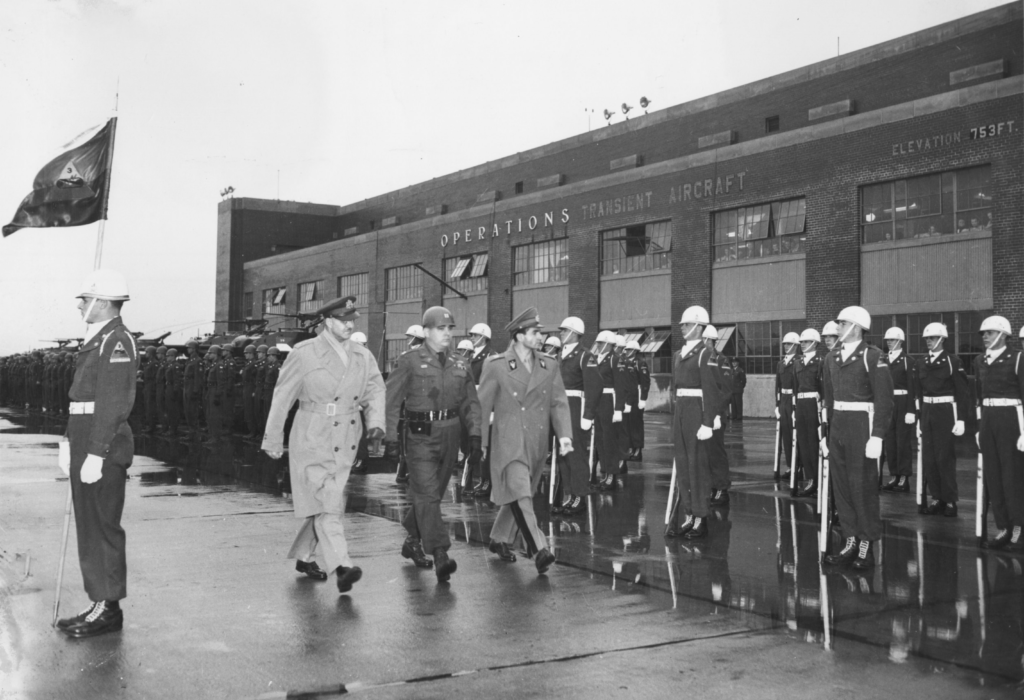
During his stay, officials repeatedly tried to redirect the young monarch’s focus.
They argued that the greatest danger to his throne was not Soviet tanks crossing the northern border, but a weaker force already at work inside his own country: poverty and uneven development.
Inside the Pentagon, generals explained that Iran’s military simply did not have the infrastructure, training, or capacity to absorb the sophisticated weapons the Shah was requesting. Advanced arms required advanced systems. Logistics. Maintenance. Industrial support. These could not be improvised.
But the shah was having none of it.
At the State Department, Secretary of State Dean Acheson delivered a more measured warning.
The free world, he said, could not match the Soviet Union weapon for weapon without destroying its own economic foundation. If nations diverted all resources to military expansion, they would weaken themselves so thoroughly that collapse would come even without invasion.
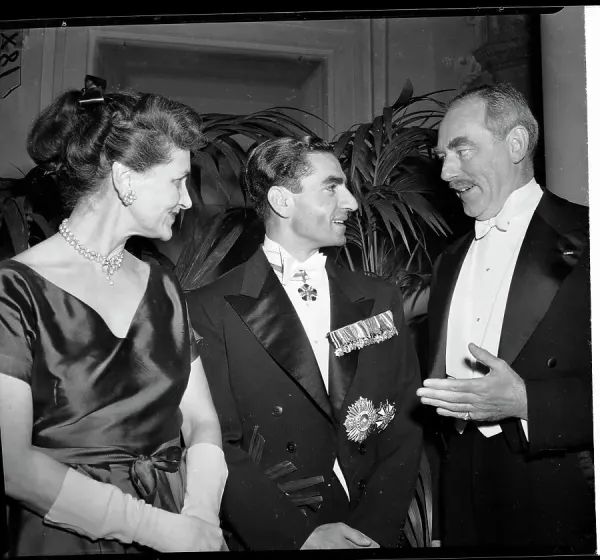
The Shah listened carefully.
He nodded. He spoke about reform, about economic modernization, about fighting corruption.
But his mind did not change.
For Mohammad Reza, economic development was a long-term horizon. The Soviet Union was immediate.
And more than that, just like his father, he saw the military not just as national defence, but as domestic leverage.
An instrument of control.
A counterweight to rivals.
A guarantee of survival.
US Military Aid to Iran: The 1949 Joint Statement
On December 30, 1949, as the Shah departed the United States, a joint statement was released in Washington.
The visit, it said, had taken place in an atmosphere of “frankness and cordiality.” Relations had been “strengthened still further.”
During his stay, Mohammad Reza had held several days of talks with President Truman and senior officials. He toured factories, farms, and military installations across the country, observing techniques that might be applied in Iran. He met industrialists, educators, and civic leaders … a curated glimpse of American power and productivity.
Publicly, the emphasis was clear: economic development.
Washington praised Iran’s Seven-Year Plan and signalled support for loans, technical assistance, and increased private investment.
But alongside those promises stood another commitment.
The United States confirmed it was prepared to provide military assistance to help Iran develop its self-defence.
A balancing act of development and defence.
For Washington, prosperity was the shield against communism.
For the Shah, the shield came first.
The Shah’s Power Grab and Ahmad Qavam’s Warning
Mohammad Reza was ambitious. But the circumstances of his rise had made him deeply insecure.
He had come to power when foreign armies forced his father to abdicate. He had seen how quickly a throne could disappear. How easily a king could be removed.
He did not want political parties undermining him. He would not allow constitutional institutions to limit him. And he refused to accept a military too weak to protect him.
Lack of control was Mohammad Reza Shah’s greatest fear.
So he reached for more of it.
But there was one man who had seen this pattern before.
Five times prime minister. A survivor of dynasties. A negotiator who had stared down the Soviets in 1946 and secured their withdrawal from Azerbaijan when Iran’s territorial integrity hung in the balance.
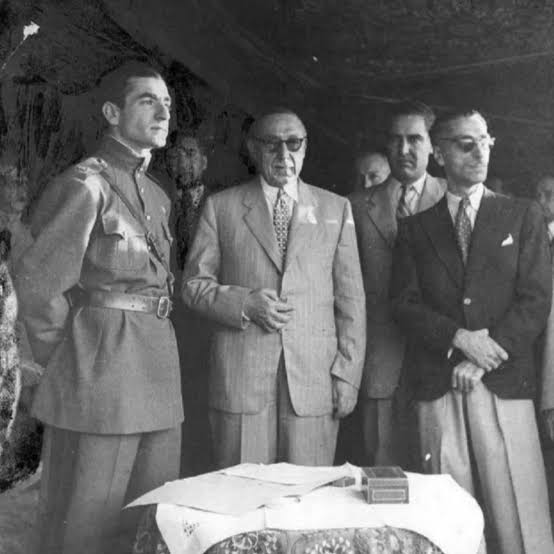
When the Shah moved in 1949 to revise the constitution, to revive the long-dormant Senate, to secure the authority to dissolve the Majlis and to expand his power, Qavam understood exactly what was happening.
From exile, he issued a warning.
Every new authority the Shah claimed, Qavam argued, would bring with it a new burden. The more power concentrated in the monarch’s hands, the more responsibility would rest there, too.
When economic hardship struck… when political unrest surfaced… when public anger grew… There would be no parliament to blame, no rival prime minister to sacrifice.
Many in Iran and abroad had already seen how paranoia and unchecked authority had led to one king’s downfall.
The only person refusing to see the pattern… was the new king himself.