

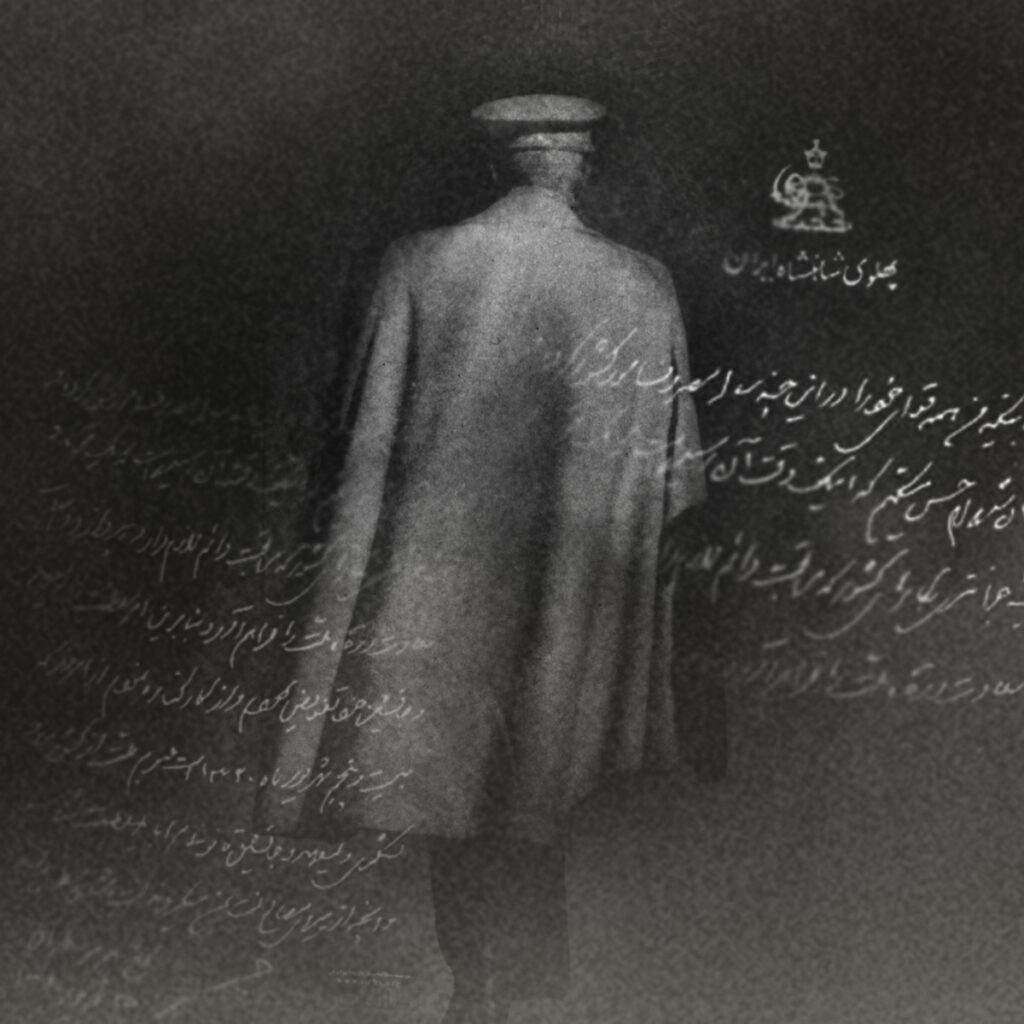
In 1944, Reza Shah Pahlavi died alone.
Banished from his homeland and despised by his people.
But even his most bitter critics couldn’t deny one thing:
He was the architect of a new Iran.
The creator of a modern empire.
From Cossack Officer to King
Reza Khan began as a simple soldier in the Cossack Brigade.
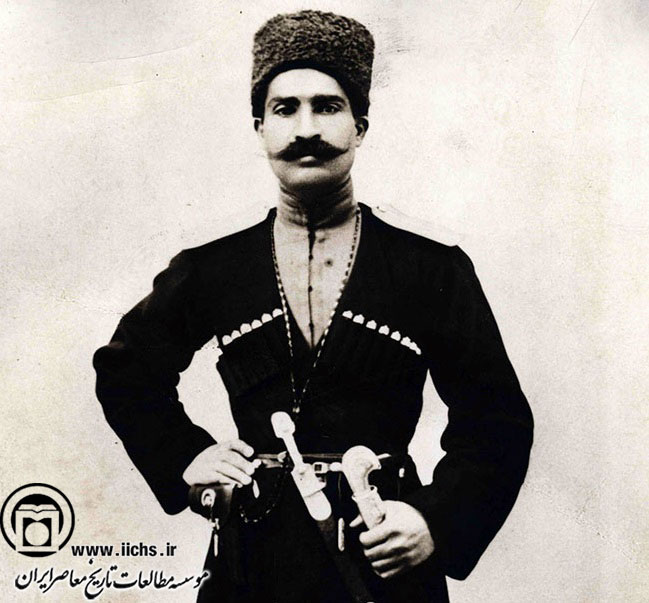
What set him apart was his discipline. His toughness. And above all, his ambition.
He climbed the ranks steadily, becoming one of the brigade’s highest-ranking officers.
By the end of the First World War, he was already one of the most powerful military figures in the country.
He entered public life through the 1921 coup, acting as the military muscle behind a British-backed journalist.
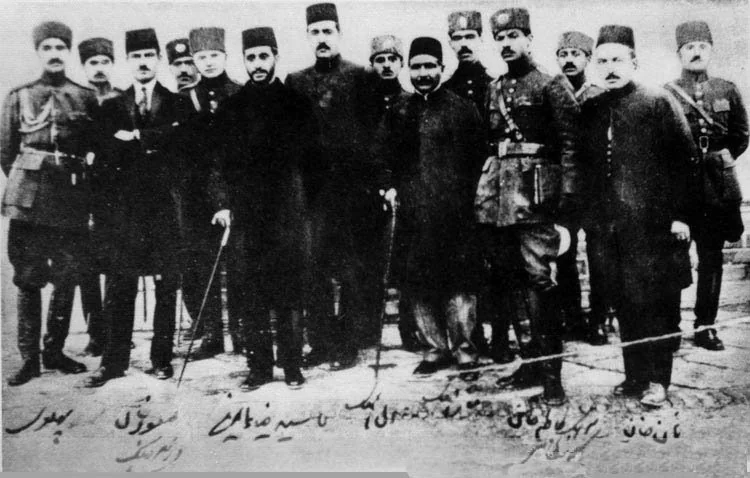
Reza Khan marched his troops into Tehran, seized control of the capital, and was named Minister of War.
Once in power, he consolidated every scattered armed group into a single national army: The only real force in the country. While cabinets changed and politicians shuffled through office, Reza Khan remained. He didn’t just control the army; he controlled the only institution capable of enforcing anything.
Within two years, he became the most influential man in Iran.
Stronger than the cabinet.
Stronger than the prime minister.
And soon … stronger than the monarchy itself.
The End of the Qajar Dynasty
In 1923, Ahmad Shah, the last Qajar king, had no choice but to appoint him as Prime Minister.
And once he had the prime ministership, the next step was clear: remove the Qajar monarchy entirely.
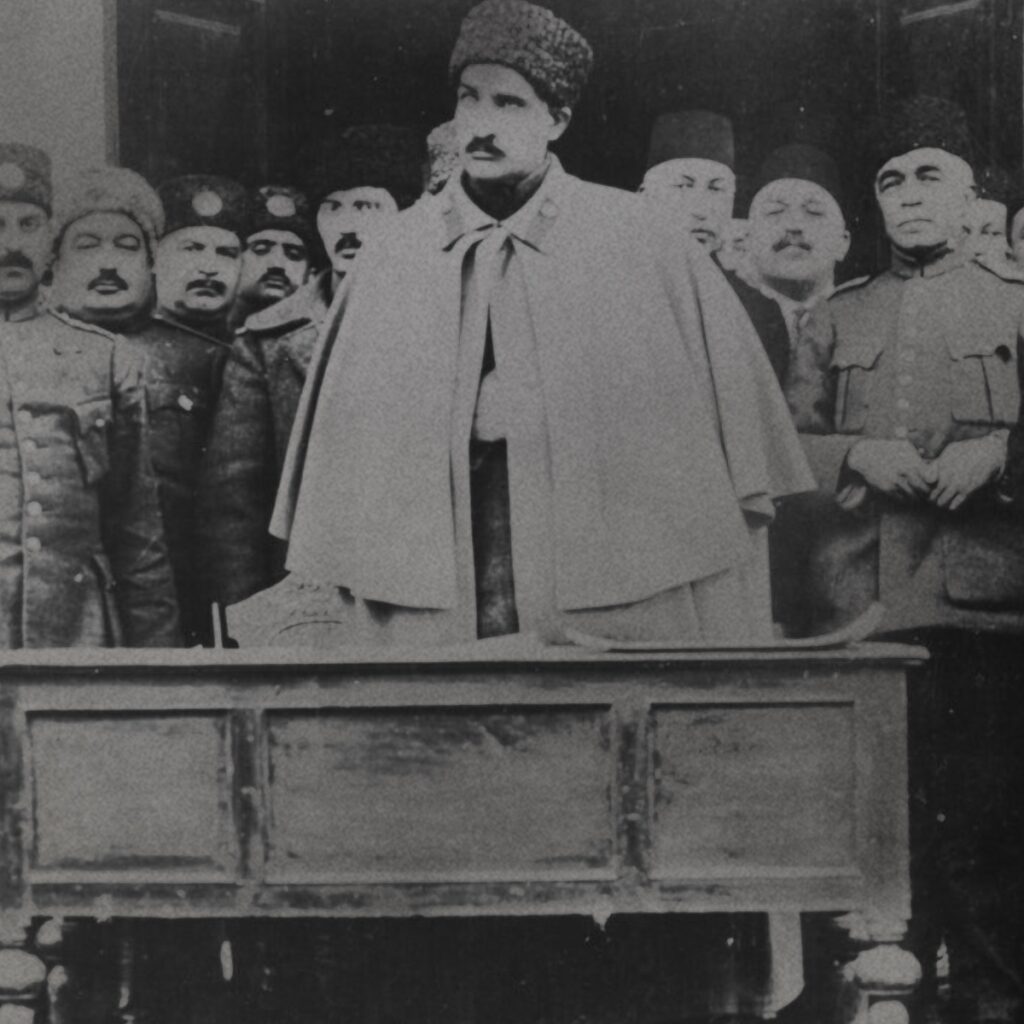
He gained support from the clergy, from modernists, and from many politicians who believed only he could stabilize Iran. Public demonstrations were organized, calling for a change in the dynasty. Even Britain signalled that it would not oppose him.
With no one left to stop him, on October 31, 1925, the Majlis abolished the Qajar dynasty and handed authority to him.
A small minority objected, including Mohammad Mossadegh, who warned that giving one man too much power would destroy the fragile balance Iranians had fought so hard to build.
But Reza Khan ignored the warnings.
And no one dared stand in his way.
The Birth of the Pahlavi Dynasty
He chose a new name: Reza Pahlavi. A surname rooted in Iran’s ancient past.
A tightly controlled election filled the Constituent Assembly with loyalists, and on December 15, 1925, they declared him the new Shah of Iran.
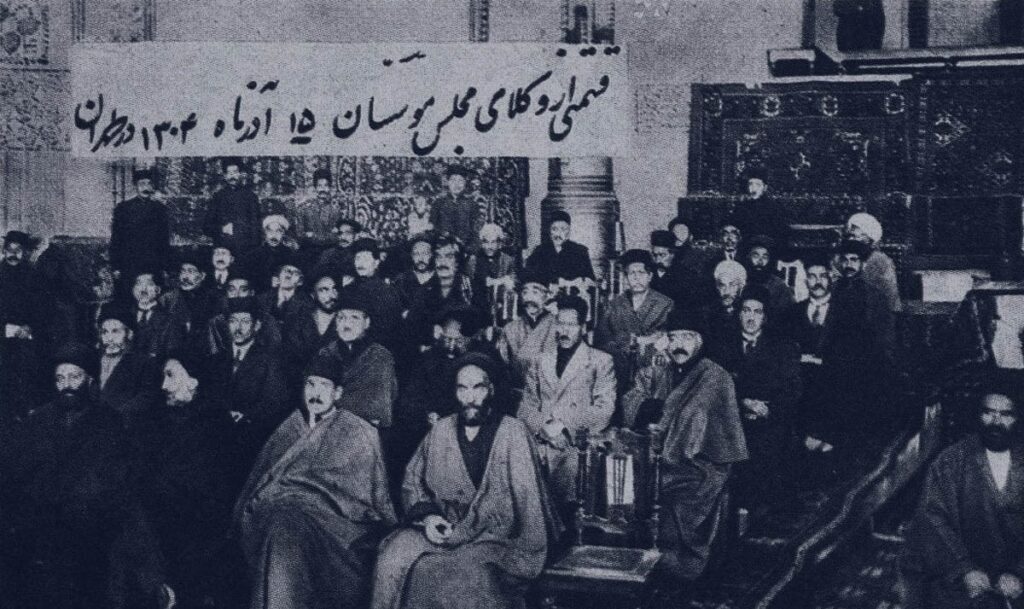
Months later, inside Golestan Palace, Reza Shah lifted the newly crafted crown with his own hands and placed it on his head.
Iran had a new dynasty. It had a new ruler.
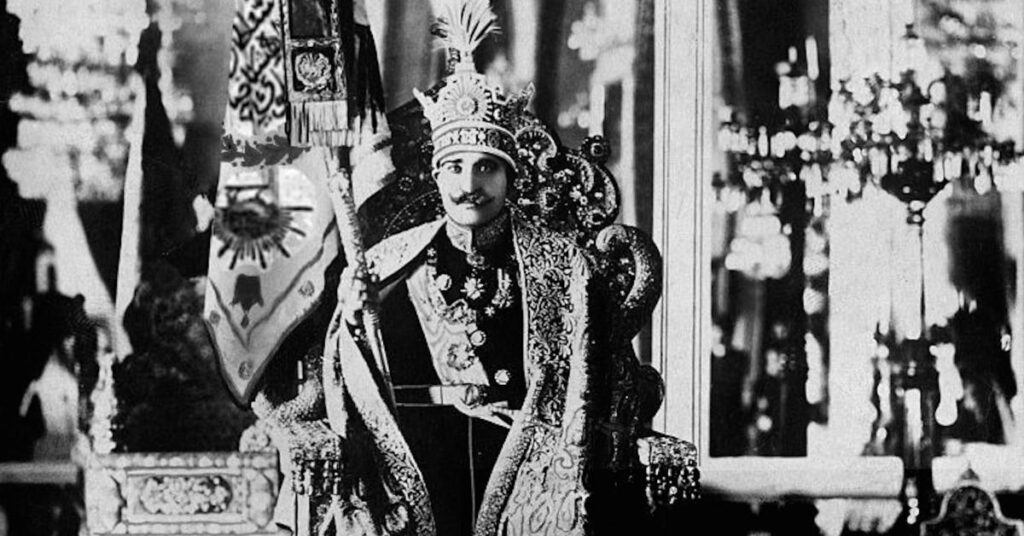
From day one, Reza Shah set out to build the centralized state the Qajars had never managed.
He expanded the army with mandatory service.
He crushed the insurgent local tribes.
Roads and railways stretched across the map, including the massive Trans-Iranian Railway, funded through taxes on tea and sugar.
The ministries grew. Regional power collapsed, and the Majlis, once a beacon of Iran’s democracy, lost its independence and became a ceremonial echo of what it once was.
In 1935, the government asked the world to stop calling it Persia and to call it Iran.
Secularization, Repression, and the War on Tradition
But as the state grew stronger, Reza Shah’s circle grew smaller.
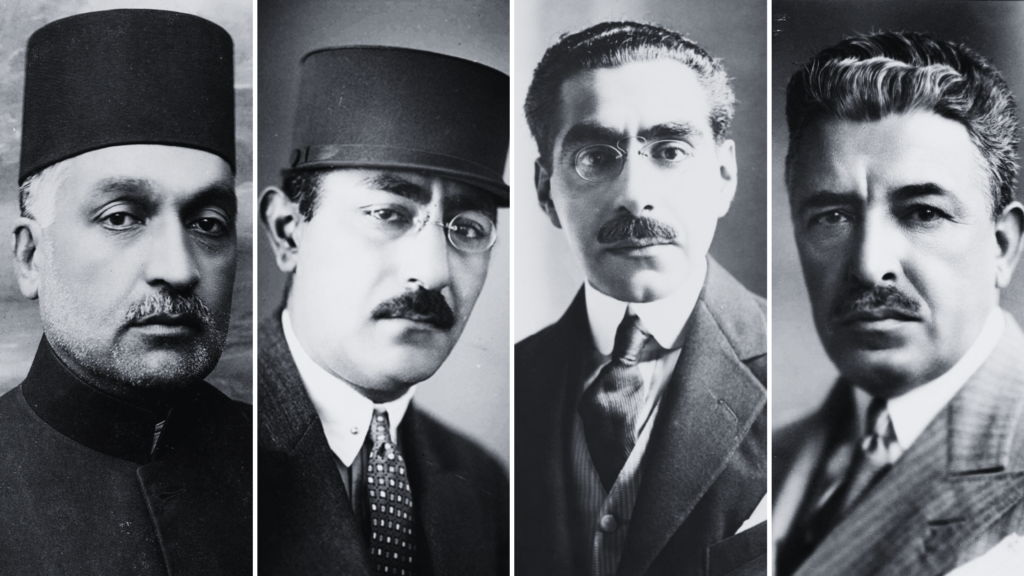
The men who had helped him rise became targets. Abdol Hosein Teimourtash, his most capable strategist, fell from favour when oil negotiations stalled. He was arrested soon after and died in prison under suspicious circumstances.
Firouz Nosrat al-Dowleh was murdered after years of exile.
Ali Akbar Davar, the architect of Iran’s modern judiciary, took his own life after a harsh scolding from the Shah and the arrest of his closest allies.
One by one, the founding generation of the Pahlavi project disappeared.
But paranoia wasn’t the only front Reza Shah was fighting on.
As his authoritarianism deepened, so did the rift with the religious establishment. After visiting Atatürk’s Turkey, Reza Shah pursued rapid secular reforms that alienated clerics across the country. The introduction of the fedora, which prevented traditional prayer posture, sparked protests in Mashhad. Inside the Goharshad Mosque, thousands gathered to demand an end to state interference. In the heat of July 1935, the military stormed the shrine. Hundreds were killed. The custodian who had urged leniency was tortured and executed.
Months later, the forced unveiling of women, known as, drove the wedge even deeper between state and society.
World War II and the Fall of Reza Shah
On the international front, things didn’t look any better.
Seeking partners free of colonial history, Reza Shah drew closer to Germany. Iran remained neutral when the Second World War began, but once Germany invaded the Soviet Union, Britain and the Soviets demanded access to Iranian territory and the expulsion of German nationals.
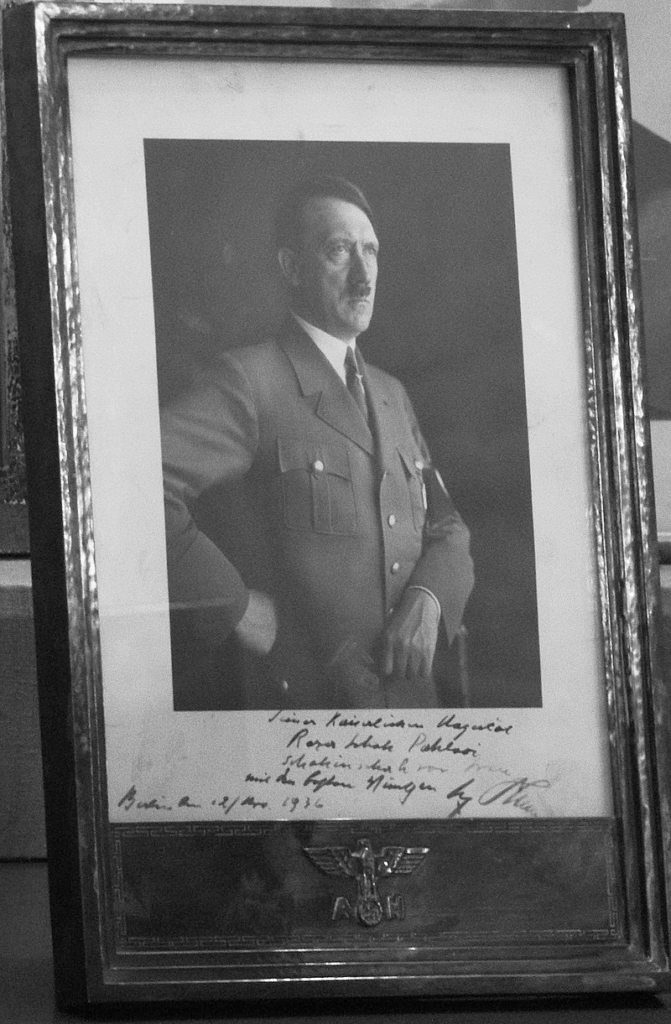
“His Imperial Majesty – Reza Shah Pahlavi – Shahanshah of Iran – With the Best Wishes – Berlin 12 March 1936 – Adolf Hitler”
Reza Shah refused.
On August 25, 1941, Allied forces invaded Iran.
The army Reza Shah had built to secure the interior crumbled before two global powers.
Cities fell fast. And many Iranians, exhausted by years of autocratic rule, welcomed the end of his reign more than they resisted the invasion.
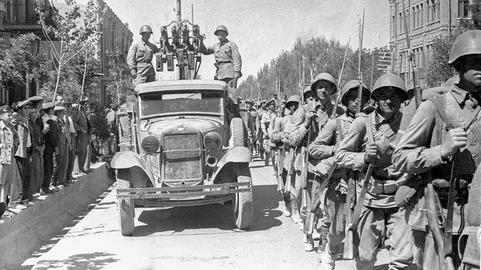
With foreign armies closing in, Reza Shah summoned Mohammad Ali Foroughi, the statesman he had once dismissed.
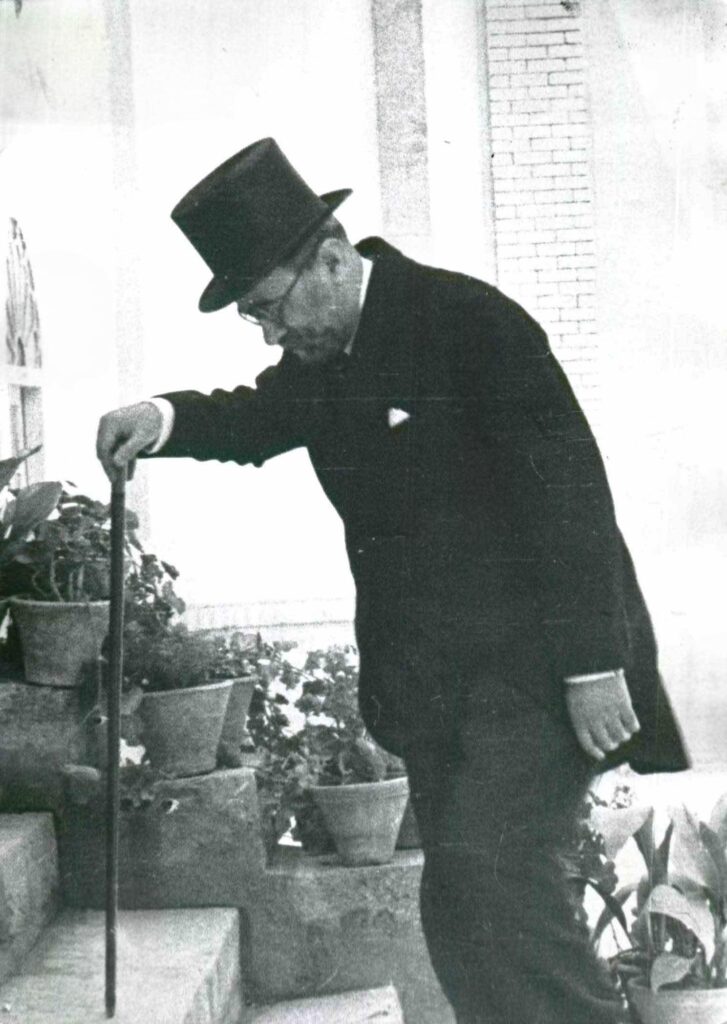
The Allies demanded the abolition of the Pahlavi dynasty, but Foroughi convinced them to preserve the dynasty if the shah abdicated.
On September 16, 1941, Reza Shah signed his abdication. And by that evening, Mohammad Reza Pahlavi had taken the oath before the Majlis.
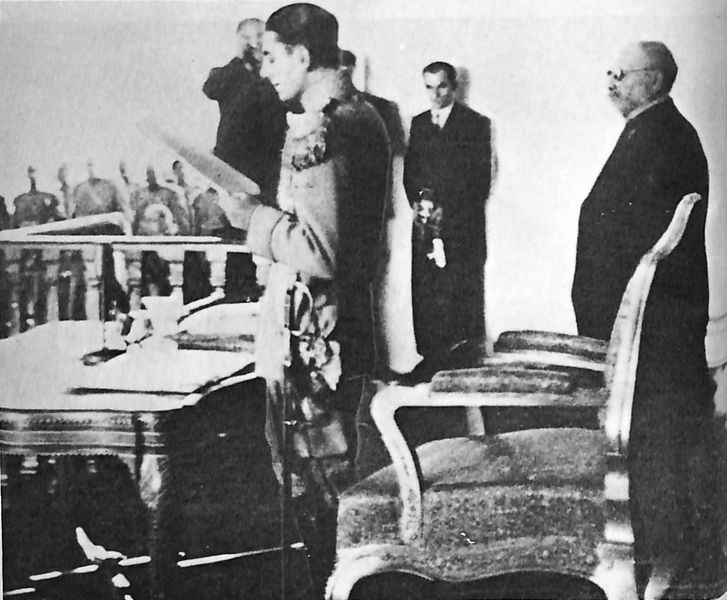
First of his name.
Second king of the Pahlavi dynasty.
Last Shah of Iran.
In Book Three of The Lion and the Sun, we explore the reign of Mohammad Reza Shah, his alliance with the United States, and the CIA-backed coup that would reshape Iran forever.
Listen to the new season in January 2026.


One Response