
This is the transcript for Book Two, episode 11 of The Lion and the Sun podcast: Exiled King. After his abdication in 1941, Reza Shah began a turbulent journey into exile through India, Mauritius, and South Africa, culminating in his final years, his death, and the mystery surrounding his burial.
In the years after World War I, Reza Khan emerged as a military commander determined to transform Iran into a unified and modern state. He dismantled tribal autonomy, curbed foreign influence, and positioned himself as a defender of national sovereignty. He brought provinces like Khuzestan under central control and opposed foreign-backed agreements that threatened Iran’s independence. Drawing inspiration from figures like Cyrus the Great and Nader Shah, he used history and symbolism to reinforce a nationalist identity, contrasting his vision with the perceived indifference of the late Qajar rulers.
In this renaissance, cultural heritage became a vital tool for the recently appointed prime minister. Reza Khan recognized that symbols could legitimize his rule and bind the nation under a shared identity. And what symbol better than the book that captured the entirety of Iran’s mythical history?
Ferdowsi and the Shahnameh: Reza Shah’s Use of Iran’s National Epic
Abu’l-Qasem Ferdowsi, a poet from Tus in Khorasan, was best known for composing the Shahnameh, or Book of Kings.
Stretching from the dawn of creation to the fall of the Sasanian Empire, this monumental epic, written in pure Persian with minimal Arabic influence, tells of dragon-slaying heroes, tragic lovers, cunning kings, and battles that shaped the fate of empires.
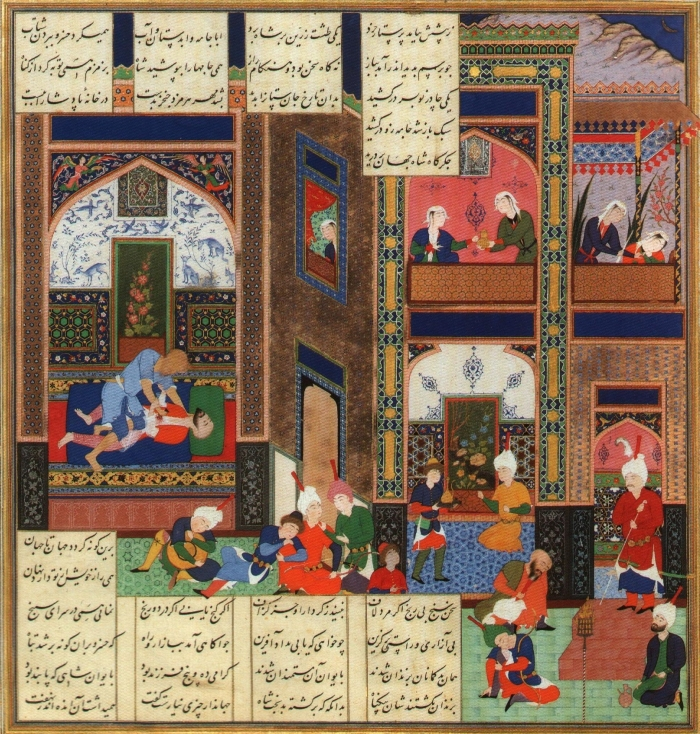
Within its verses, gods and mortals share the stage in epic tales, and the grandeur of ancient Iran pulses in every line. It turns the poem into both a national epic and a timeless meditation on power, honour, and the cycles of human destiny.
Over centuries, the Shahnameh had become a cornerstone of Persian literature and a symbol of Iranian identity.
Rebuilding Ferdowsi’s Mausoleum: Cultural Nationalism Under Reza Shah
By the early 20th century, Ferdowsi’s burial site in Tus had fallen into neglect. It was reduced to little more than a platform in a garden. In 1924, Teymourtash, then a parliament member for Neyshabur, formally proposed allocating state funds to build a proper mausoleum. His proposal aligned with Reza Khan’s broader movement of cultural nationalism, and the plan was quickly approved. The newly formed Society for National Heritage, led by Foroughi, took charge. They acquired land around the grave, securing funds from both donations and parliament. They also commissioned architectural designs inspired by Achaemenid stone monuments.
Construction lasted eight years.
The mausoleum was completed in 1934, just in time for grand millennium celebrations. It was attended by scholars and dignitaries from around the world. By then, Reza Khan had become Reza Shah Pahlavi. He attended the inauguration as king. He used the occasion to reinforce his cultural policy of linking Iran’s modern statehood with its ancient imperial past.
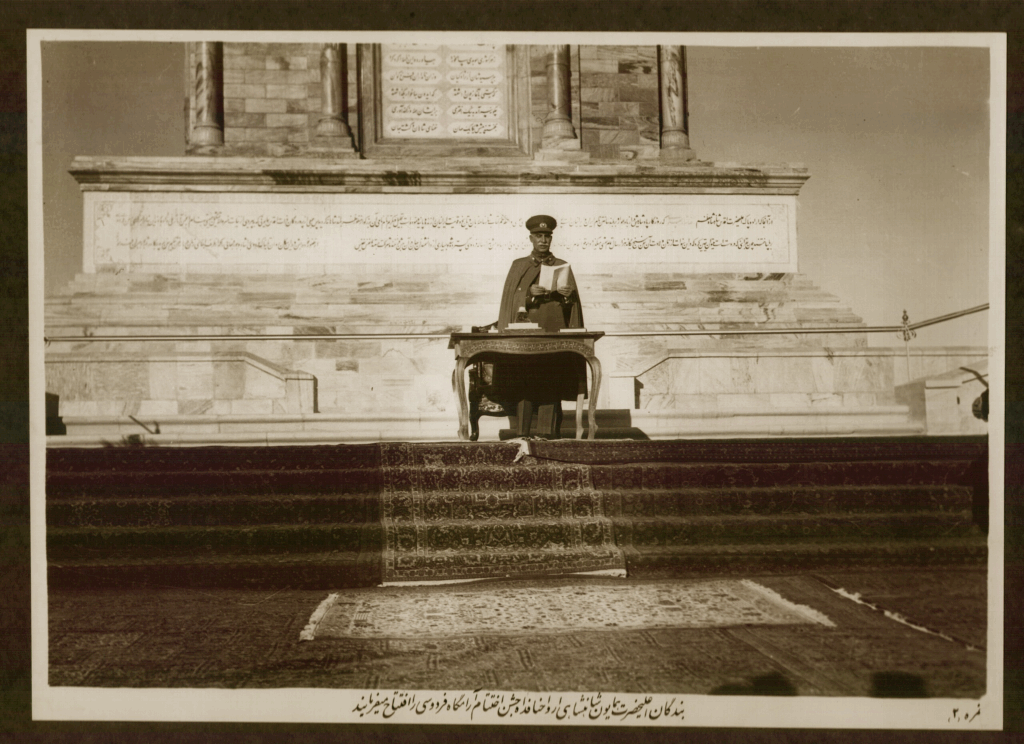
“Ferdowsi must have been a great man,” the king said in the ceremony.
“For such a grand monument to be built over his tomb nearly a thousand years later. Will there come a day when such a monument is built for me?”
Little did he know …that day would never come.
Not for him, at least.
The Allied Invasion of Iran and Reza Shah’s Forced Abdication in 1941
Reza Shah’s abdication represented his entire reign in a nutshell:
Straightforward, without any fluff and straight to the point.
On September 16, 1941, the king signed the abdication letter, written for him by Foroughi, his prime minister, and ended his 16-year reign.
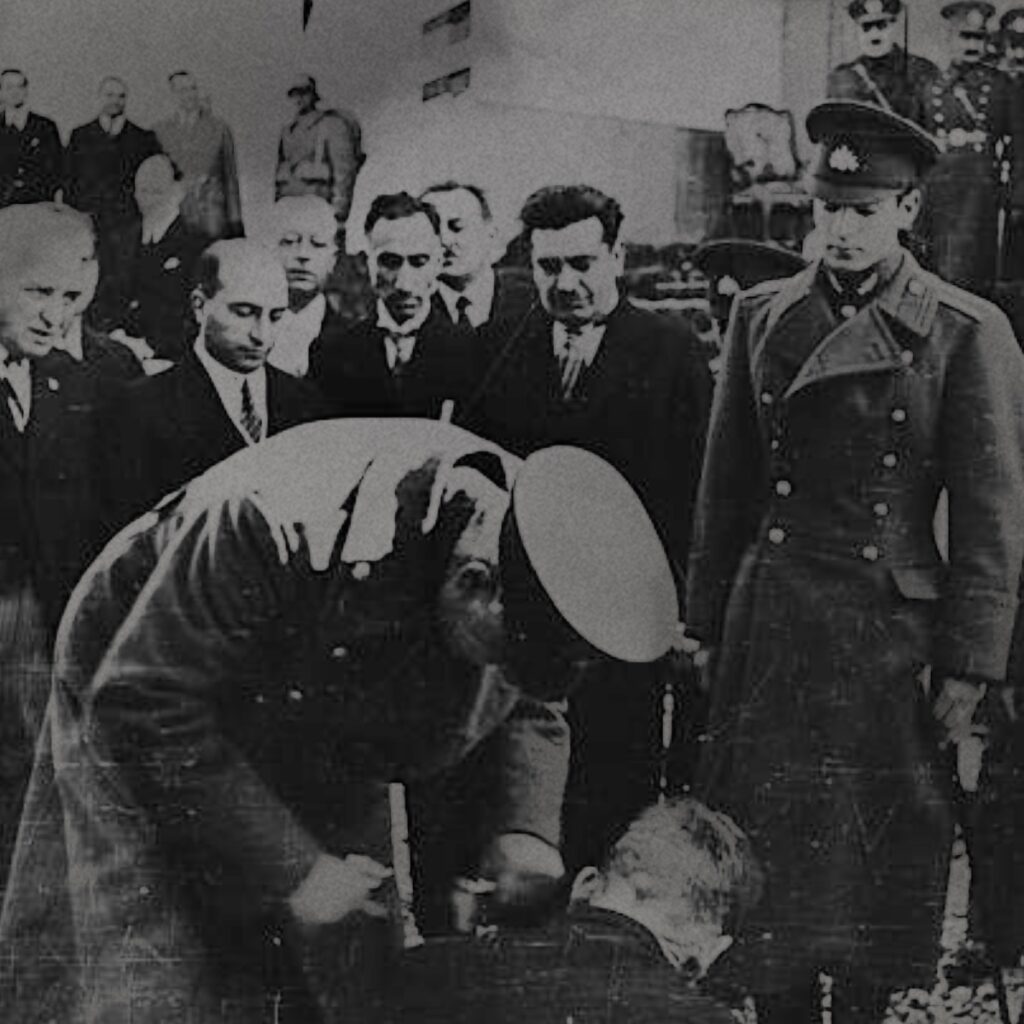
The events preceding his resignation happened so fast that they had all become a blur.
First, there was Iran’s friendship with Germany. Then the Allies’ warning for the friendship to stop. Then it was Reza Shah’s defiance of the West. And finally, there was the invasion.
The Anglo-Soviet invasion of Iran wasn’t just an invasion. It was an all-out war.
On every front. And from every direction.
Swift. Coordinated. Brutal.
Iran’s military, once Reza Shah’s crowning achievement, could do nothing to stop it. One by one, Iranian cities fell, and the British and Russians inched closer toward the capital.
Reza Shah’s Journey Into Exile Begins: Tehran to Esfahan
With Allied forces approaching Tehran, Reza Shah turned to a former prime minister he had himself dismissed and sidelined six years earlier: Mohammad Ali Foroughi.
Seeing no solution under occupation except Reza Shah’s abdication and the transfer of power to his son Mohammad Reza, Foroughi drafted the resignation by hand and secured Shah’s signature.
But that wasn’t enough.
For a ruler whose power had collapsed and who now faced capture by the Soviets, remaining in Iran was no longer an option.
Foroughi didn’t waste a second.
As soon as the resignation was signed, the king was escorted out of Sa’adabad Palace and into his royal entourage. Reza Shah got into the first car, and five others followed him. Two for security. Three for his baggage.
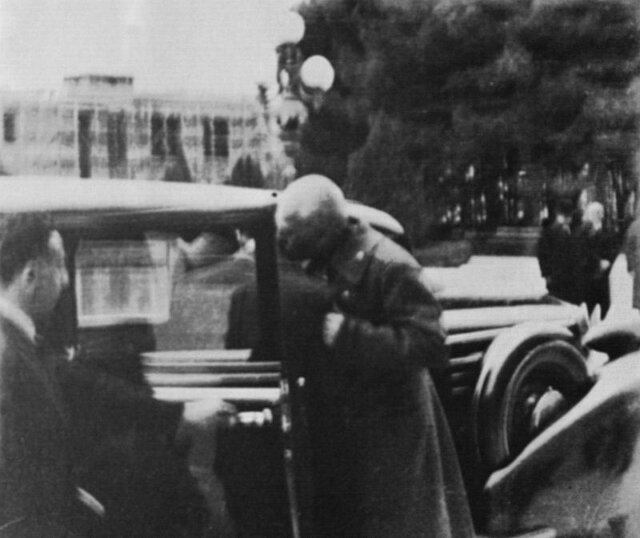
Their first destination? Esfahan.
When the king thought the Allies’ onslaught on the capital was imminent, he sent his family to Esfahan for safety.
Now he was on his way to pick them up.
British Control Over Reza Shah’s Exile
But not all of the king’s family were eager to leave the country with him. Taj al-Molouk, Reza Shah’s second wife and mother of the heir, decided to stay in the country with her son. But Mohammad Reza’s sisters and brothers had no choice but to leave.
Having abdicated, Reza Shah was under the impression that he was free to choose his own place of exile.
The young women of the family had set their hopes on Chile or Argentina. Countries that they thought were suitable due to their climate. Visas for Argentina were even being issued as the family made their way into exile.
Reza Shah himself seemed to be thinking of taking up agriculture once settled in South America.
The British had other plans.
If Reza Shah was sent to a neutral country, he could become a target of Nazi agents and ultimately end up as a resistance figure, a shadow government tied to Germany.
No. They wanted him to remain firmly in British hands.
And that meant exile somewhere within the British Empire.
So another destination was set: India.
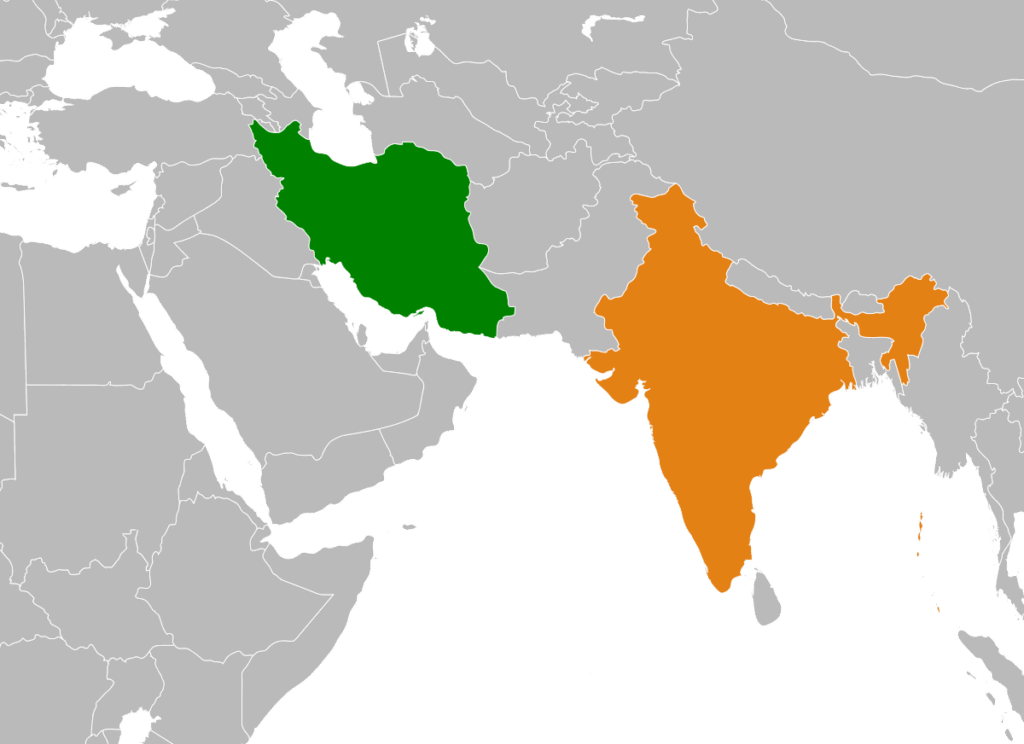
But before their departure, there were still matters to settle.
The Fall of Reza Shah: Loss of Power, Property, and Dignity
First was the issue of Pahlavi properties.
As we mentioned in the third episode of Book Two, by the time of his abdication, Reza Shah owned over 3 million acres of farmland across various parts of the country.
According to the British legation, Reza Shah had an “unholy interest in land.” He often acquired property through questionable means, including imprisoning landowners until they agreed to sell at heavily discounted prices.
Now, he was forced to transfer ownership of these lands to his son, losing many of the assets and properties he had amassed during his reign. One of the cabinet ministers was present to make sure everything went smoothly.
For the ex-king, this was humiliating.
His cabinet had never had the guts to look him in the eye. Now they stood next to him, collecting the signatures that gave away everything he owned.
And that wasn’t the end of it.
In the final moments before their departure, a member of the government searched every single one of the king’s bags, making sure he hadn’t taken anything that wasn’t his.
The man who once commanded a nation was now being treated like a petty thief.
Stripped of titles, properties, and dignity, and thoroughly searched, Reza Shah was finally allowed to leave his country through Bandar Abbas on September 27 at 7 a.m. Never to return again.
Reza Shah Leaves Iran: The Final Departure from Bandar Abbas
The procession was large. Reza Shah, his fourth wife, her half-sister and lady-in-waiting, six sons and three daughters aged between ten and twenty-four, a son-in-law, a private secretary, a cook, half a dozen servants, several cars, and two truckloads of belongings.
It was less an escape and more a portable palace.
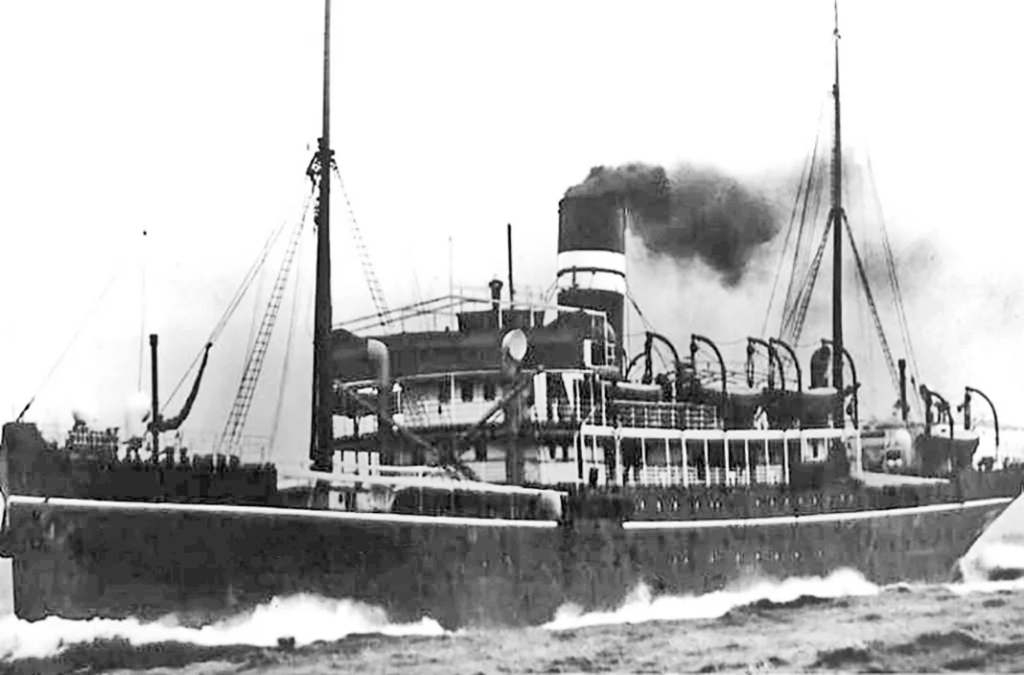
The ship that awaited them, the Bandra, was no royal liner, just a small 5,000-ton cargo vessel of the British India Steam Navigation Company, hastily repurposed in wartime to ferry people along with goods.
Princess Shams later called it “a poor, wretched vessel,” its English officers and Indian crew offering only the barest comfort. Still, the voyage to Bombay passed without incident.
Meals were taken in a cramped dining room. Reza Shah dined alone in his small cabin, then spent long hours pacing the deck. He slept not in a berth but under the open sky, his bedding spread directly on the boards.
On the morning of October 2, the coastline of Bombay appeared on the horizon. The first fixed point in an otherwise uncertain exile. But as the ship approached, the illusion broke.
Exile at Sea: Reza Shah’s Attempt to Enter India and British Rejection
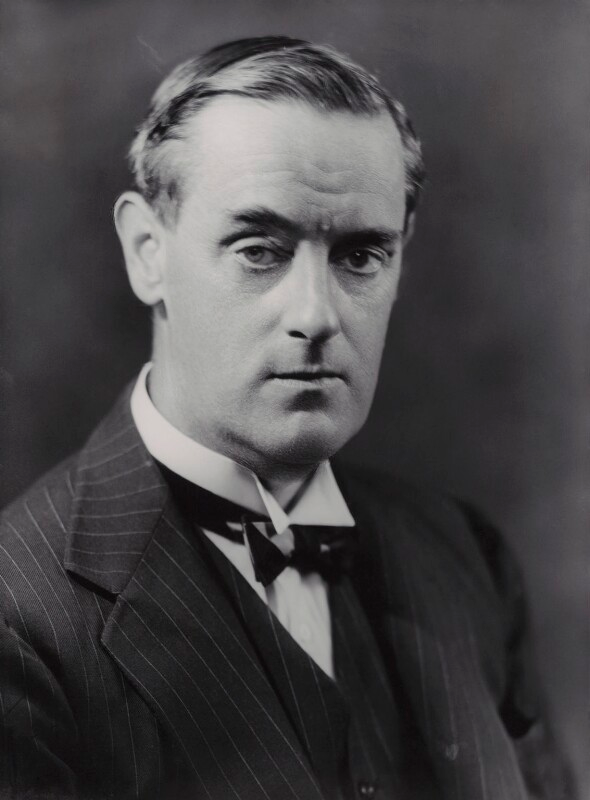
British authorities, fearing unrest, denied the royal party entry.
Lord Linlithgow, the Viceroy of India, had decided that Reza Shah’s presence would be “a gift for muslims who want to make trouble for India over Persia.”
Allowing him to remain in India, they feared, might stoke political agitation in Muslim communities already sensitive to British actions in Iran.
The news was delivered aboard the Bandra. A telegram ordering the Shah sent elsewhere, to an island whose name meant nothing to him.
Reza Shah stared at the envoy, certain there had been a mistake in translation. He asked Ahmad Jam, his son-in-law, to confirm the destination in French. The answer was the same.
The shock was deep enough to weaken him.
The ex-king protested immediately. He had abdicated, he said, on the understanding that he would be allowed to go to South America. He sent a telegram of protest to the Viceroy, and another to his son, now Mohammad Reza Shah, pleading for intervention. But the decision held.
It turned out that the British knew from the beginning: there would be no Argentina, no Chile, and no India. They had just waited until the last moment to break the news. To prevent a disturbance to the plan.
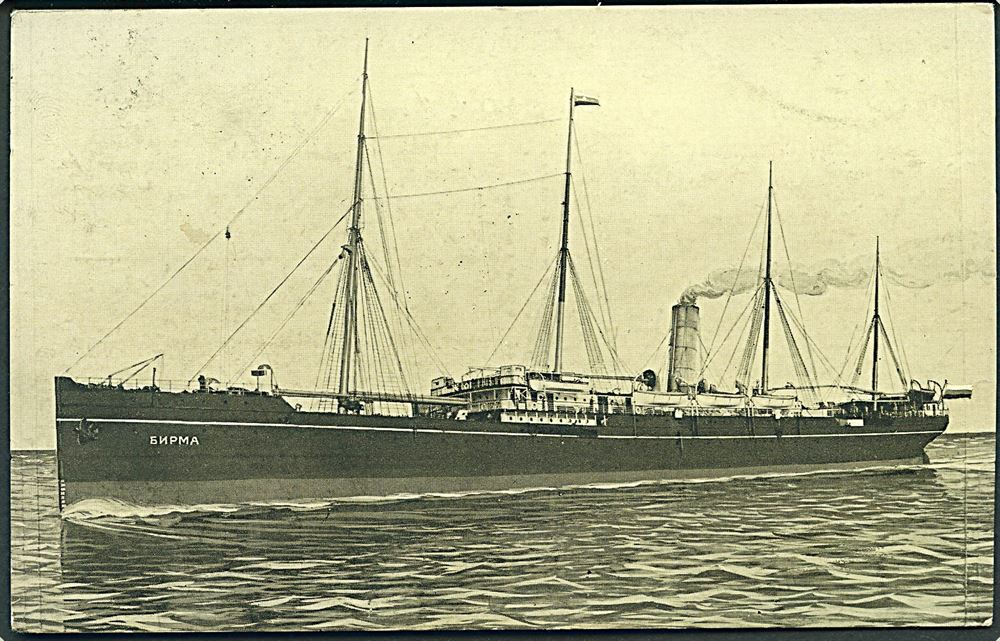
The ship remained docked at Bombay port, but ultimately had to depart. This time on the SS Burma. But the Indian government didn’t even allow them to dock and change ships. The SS Burma had to be pulled alongside the Bandra so that the travellers and their baggage could be transferred.
Reza Shah’s Exile in Mauritius: Isolation, Illness, and Surveillance
The Burma sailed from Bombay on October 6 and arrived in Mauritius on October 18.
Reza Shah’s exile had officially begun.
He was housed in Valory, a three-story villa in Moka, Port Louis, furnished by the governor’s wife. Among the items provided was a bed that had once belonged to one of Napoleon’s generals. Reza Shah refused to use it, preferring to sleep on a small rug on the floor as he always had.
The British supplied comfortable accommodations, transport, and food, but any personal luxuries came from his own pocket, a sore point, as he often complained of being penniless and dependent on his son’s allowances.
The island’s hot, damp climate quickly wore on him. Frogs croaked outside his windows at night, the local press published unflattering stories, and he considered the place a prison. He rarely set foot beyond the villa’s walls, imposing what he called a “voluntary imprisonment” upon himself.
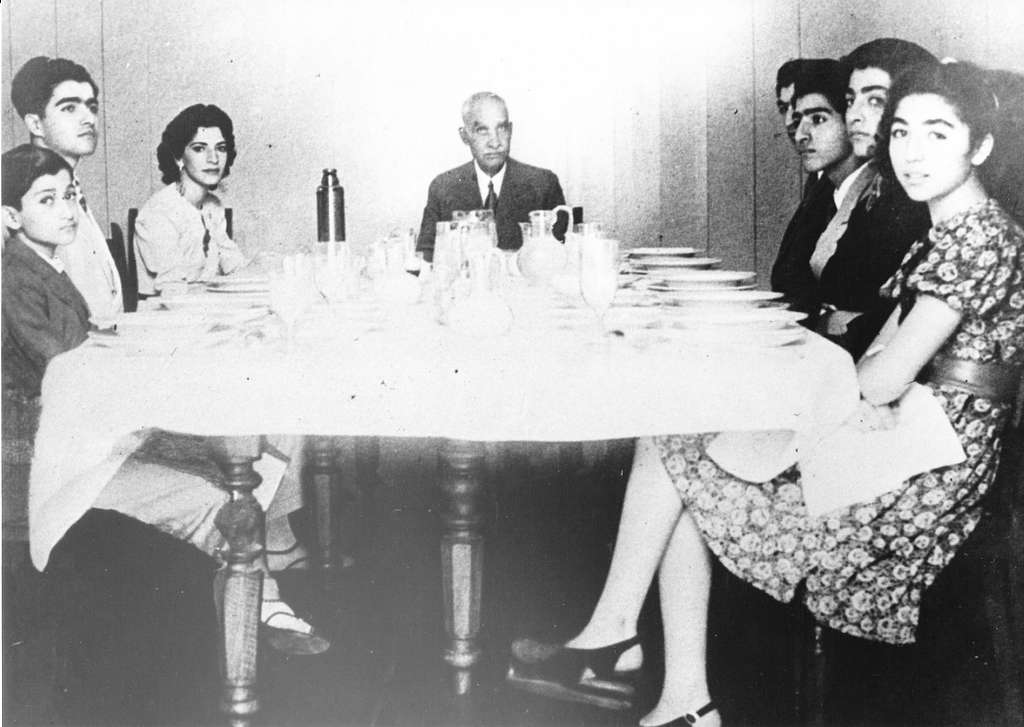
His daily routine was monotonous. Early to bed, early to rise, long walks in the garden, solitary meals, and long hours listening to Radio Tehran and the BBC Persian Service, often reacting angrily to their commentary about him. Letters to and from the villa were subject to censorship, especially when they contained complaints about his conditions.
By early 1942, his health was deteriorating.
What began as earaches and fever developed into more serious ailments—cardiac problems, liver disease, and intestinal trouble. The British feared he might die on the island, and Mohammad Reza Shah, now on the throne, pressed them to move his father somewhere with better medical facilities and schooling for his brothers.
The British were reluctant at first, but they finally listened to the young king and did him a favour.
Reza Shah in South Africa: The Johannesburg Years
On April 16, 1942, Reza Shah boarded the SS Empire Woodlark and sailed to Durban, South Africa, arriving in early May. Unhappy with the low-altitude, coastal environment, he asked to move to Johannesburg. The British had initially planned to send him on to Canada, but he refused. He declared he would only go there “as a political prisoner.” South African Prime Minister Jan Smuts agreed to let him stay in Johannesburg as a “distinguished visitor.”
In Johannesburg, Reza Shah found the climate more agreeable and received visitors from Iran, but he remained under British supervision. His correspondence was monitored, his travel restricted. Even with significant funds, he continued to voice anxiety about money.
When Reza Shah first arrived in Johannesburg in 1942, the contrast with Mauritius was striking.
After months of self-imposed isolation on a damp, insect-filled island, Johannesburg felt open, orderly, and alive. He was impressed by the city’s wide avenues, clean streets, and multistory buildings—features he had long hoped to see in Iran. The sight of women in public life—driving taxis, running shops, even operating trucks—surprised him, as did the fact that even the grocer and washerwoman arrived at his home in their own cars.
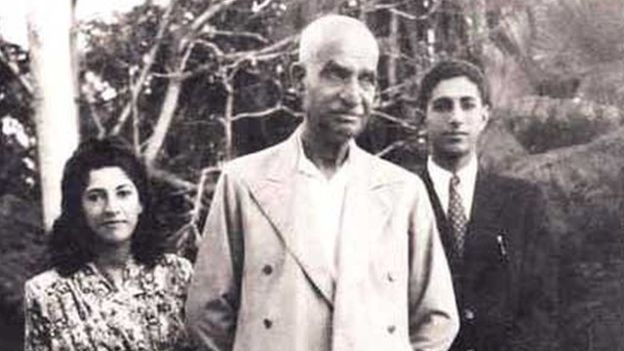
He enjoyed walking through the city, taking in its modern rhythms. He visited the zoo, lingered by Lake’s musical fountain, and observed the steady flow of people getting on and off trains. These outings also reminded him of his unfamiliarity with life outside Iran; on one walk, unaware that pedestrians had to obey traffic lights, he tried to cross on a red signal and was stopped by a policeman.
Reza Shah’s Last Years in Exile: Decline, Isolation, and Fading Strength
But as the months passed, Johannesburg’s early appeal faded.
His wife, his youngest children, and most of his attendants had returned to Iran. Princess Ashraf visited only briefly. The five older sons who remained were often occupied with their own lives, and Reza Shah, increasingly reclusive, spent much of his time alone in his room.
He rose late, ate every meal in solitude, and saw Nowruz (the Iranian New Year) less as a moment of renewal than as a painful reminder of absence.
In letters to his family, he confessed to an unspoken heaviness of spirit, wishing to be somewhere nearer to Iran, where visits would be easier.
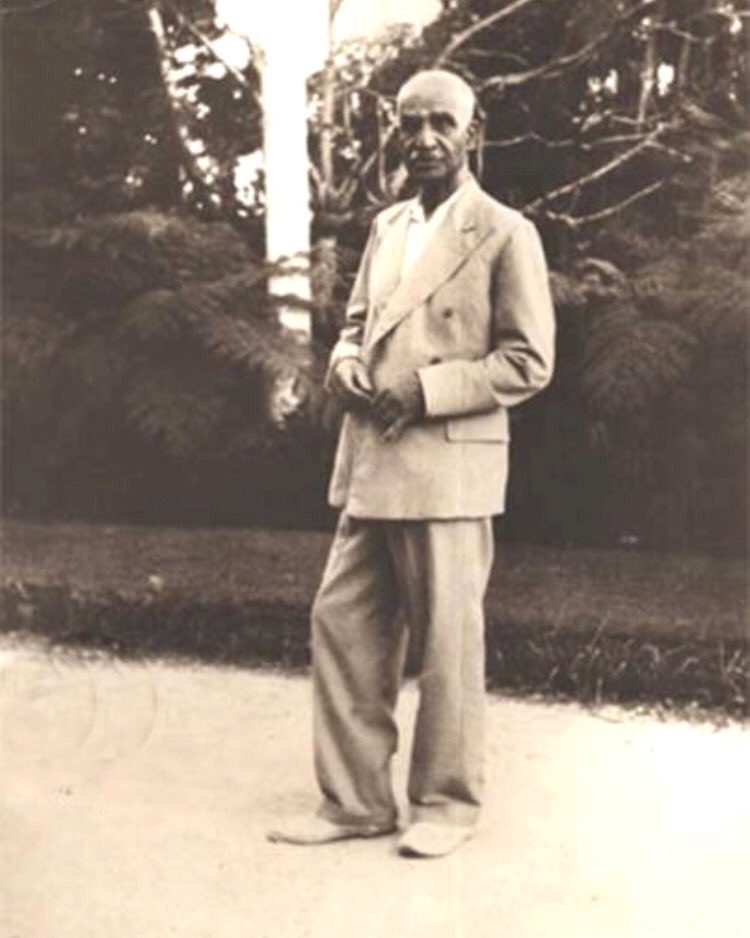
By mid-1944, his health had sharply declined.
Once a man of military stamina, he now struggled to walk even inside his bedroom. In June, he suffered a severe heart attack before dawn, collapsing on his way to the bathroom. For a brief time, after emergency treatment and a visit from his daughter Shams, his spirits lifted. He ventured into the garden, exchanged lighthearted remarks with his staff, and seemed to rally.
But this was merely a false dawn before the endless night.
Reza Shah’s Final Hours in Johannesburg
In the twilight of dawn, the world was neither awake nor asleep. The winter weather was cold. July was always one of the driest months in Johannesburg, South Africa.
In those early hours of the day, Parktown people’s heads were visible from the windows. Some had even taken to the streets.
The sun wouldn’t rise for another hour, yet the commotion outside made the residents curious.
An ambulance sat parked in front of one of the larger houses on the block, with the medics urgently attending to the unit’s resident.
The locals barely knew the old man who lived there.
He was rarely seen. A mystery figure who sometimes walked around his yard and mostly never left the house. He didn’t speak to the people living there, as if he couldn’t even understand their language. He never had any visitors, except for his doctor.
The man was a true outsider.
The sound of his heavy, military boots occasionally echoed through the quiet streets, a reminder of his presence.
This isolation fueled the curiosity of the Parktown residents. It sparked a wave of rumours about the mysterious old man living on their block.
Some claimed he had been a military officer. A lieutenant who crushed rebellions and commanded armies. Others whispered that he was a hero who had saved his country. A few believed him to be a ruthless dictator responsible for betraying his allies and killing his friends. Some regarded him as a nationalist who had dedicated his life to rebuilding his homeland.
But none of that mattered now. There was little the doctors could do.
The Death of Reza Shah in South Africa: July 26, 1944
At 6:00 a.m. on July 26th, 1944, the people of Parktown gathered to witness their mysterious neighbour for the last time. As the ambulance carried the body away, whispers rose in the cold morning air.
Whispers about the man who had once been a simple soldier, rising to become the prime minister of an empire.The prime minister, who had overthrown a century-old dynasty to establish a kingdom in his own name. The king, who had been banished from his land by the foreign powers that once supported him.
Reza Shah of the House of Pahlavi, exiled from his homeland, destined to die far from the country he had once ruled, alone and forgotten.
Aftermath of Death: Reza Shah’s Remains and British Handling
Immediately after his death, his private secretary, Ali Izadi, and H.D. Tonking, his main link to the authorities, locked away his papers and valuables. An inventory recorded everything from Persian carpets and military uniforms to a Patek Philippe gold watch, Zeiss binoculars, jewelry, and gold insignia. His family, Princess Shams and Prince Ali Reza, viewed the body, though his two youngest sons did not.
The British, never eager to accord him ceremonial honours, initially suggested transporting the body in an oil tanker or sending it to Bombay before Iran. The options the Iranian side firmly rejected as undignified. The Iranians proposed flying the remains directly to Tehran, but wartime constraints made that impossible. Or at least that’s what the British claimed.
British delays in airlifting the body to Tehran led to a decision: the body would be temporarily interred in the Al-Rifai Mosque in Cairo.
Reza Shah’s Body in Cairo: Temporary Burial at Al-Rifai Mosque
In late October 1944, Reza Shah’s body left South Africa by ship, arriving at the port of Suez before being carried by special train to Cairo. There, the Egyptian authorities, connected to Iran’s royal family through Queen Fawzia’s marriage to Mohammad Reza Shah, staged a full ceremonial welcome.
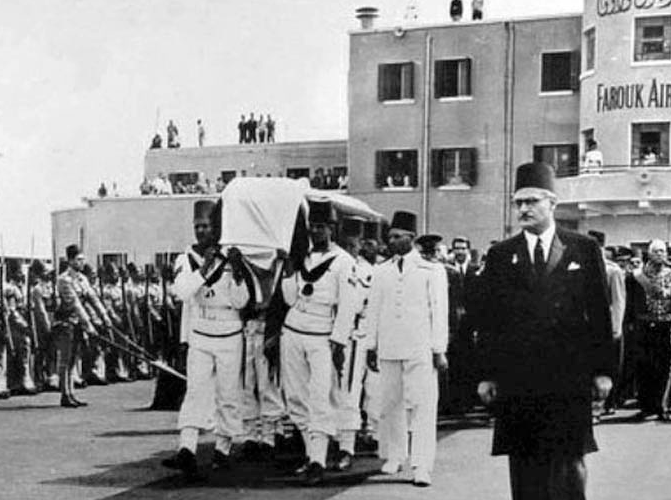
Egyptian dignitaries, the prime minister, members of the cabinet, and the diplomatic corps greeted the coffin. Royal Marines bore it on a cannon bed draped with the Iranian Lion and the Sun flag. Salvos were fired, aircraft flew overhead, and an army band played Chopin’s funeral march.
Former prime minister Mahmoud Jam oversaw the process, hiring a Russian embalming expert, Dr. Bulgakov, for 400 Egyptian pounds to mummify the body in 17 days.
On November 17, 1944, in the presence of Prince Ali Reza, Mohammad Reza’s younger brother, the body was placed in the mosque’s crypt.
Return of Reza Shah’s Remains to Iran and the Shahr-e Ray Mausoleum
Reza Shah’s remains did not return to Iran until six years after his death. His son, Mohammad Reza Shah, waited for the Second World War to end, for the political situation at home to stabilize, and for the completion of a monument worthy of his father’s image.
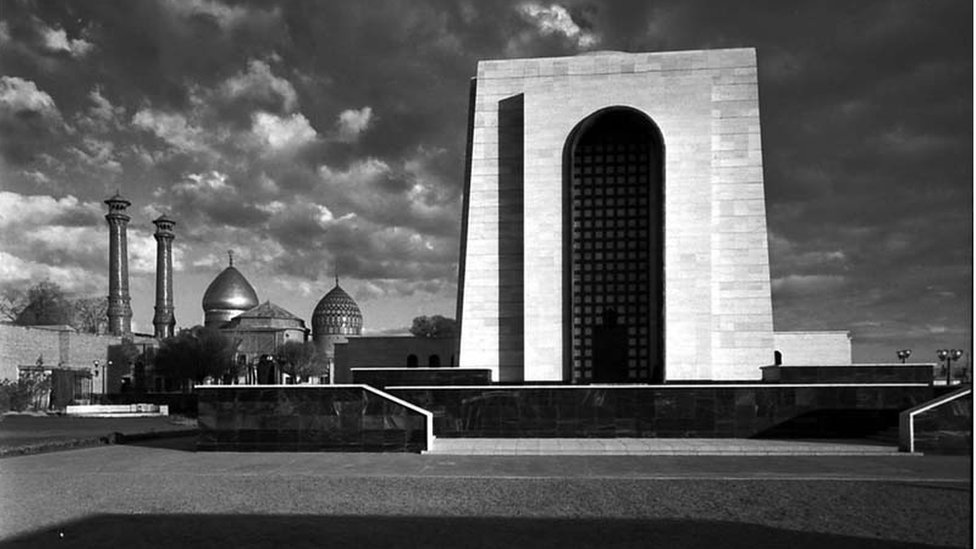
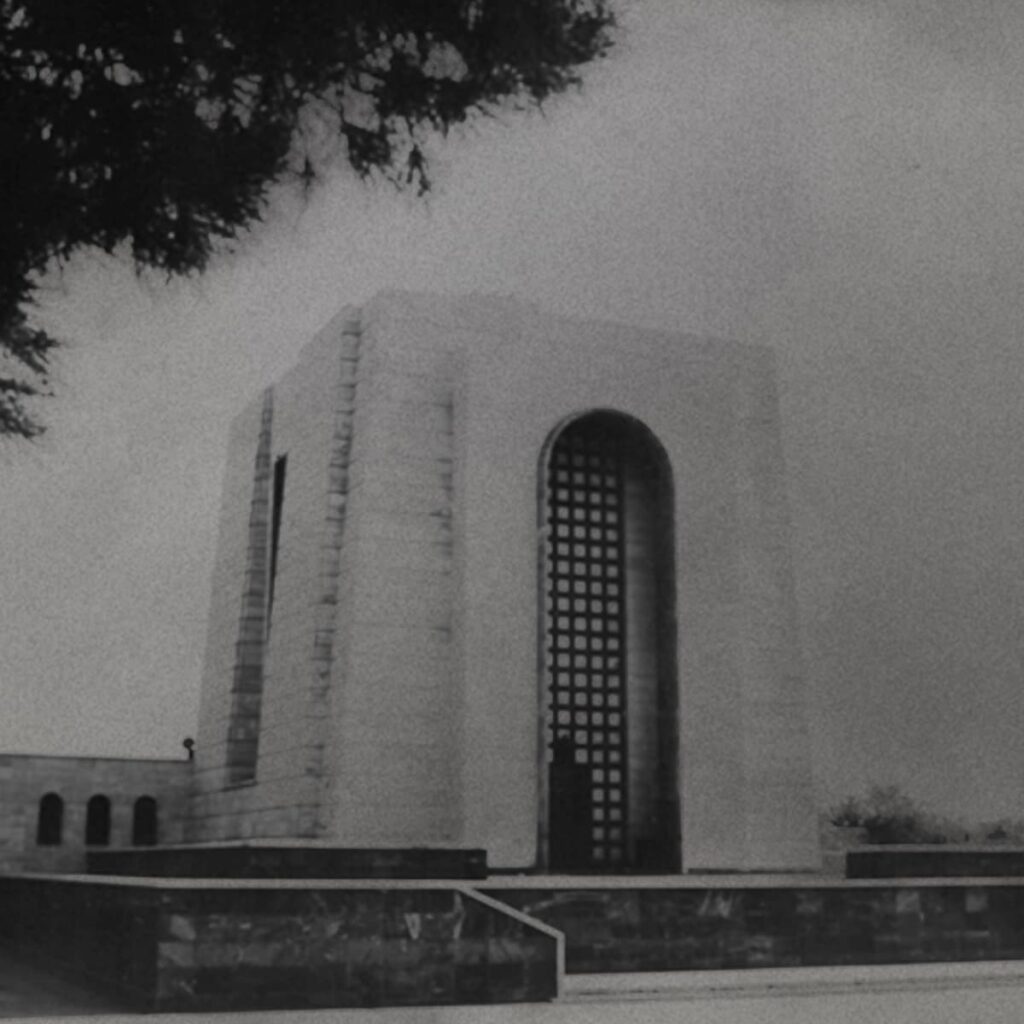
He ordered the construction of a grand mausoleum in Shahr-e Ray, a historic shrine city near Tehran.
By May 1950, the mausoleum was complete. The late Shah’s body was transported from Cairo via Jeddah to Ahwaz in southern Iran, then carried north by special train. Along the way, ceremonial stops were held in major cities, including Qom, where the coffin was circumambulated around the shrine of Fatima, a revered figure in Shia tradition. Foreign governments were invited to send military representatives, a tribute to Reza Shah’s identity as a soldier above all else, but only a few accepted.
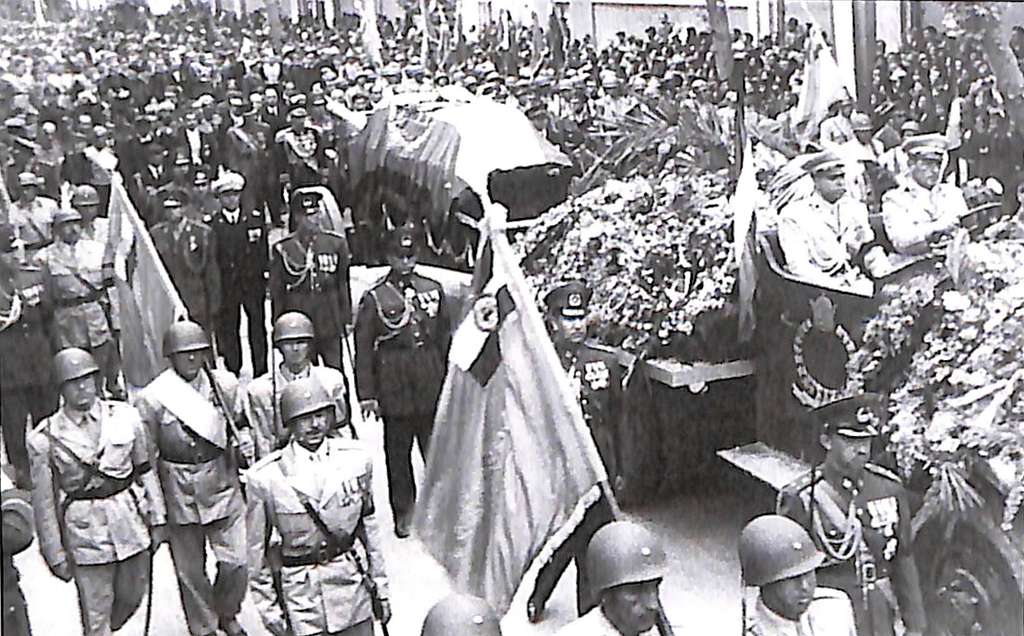
In the final stage of the journey, the coffin, mounted on a cannon carriage and accompanied by Mohammad Reza Shah, members of the royal family, the prime minister, cabinet ministers, parliamentarians, and foreign diplomats, was brought to Shahr-e Ray and interred in the mausoleum’s crypt.
For the next quarter century, the site became a place of official homage. Visiting heads of state laid wreaths at his tomb, and in 1975, it hosted ceremonies marking the fiftieth anniversary of the Pahlavi dynasty.
It seemed that after years of exile, sorrow and humiliation, Reza Shah, the founder of the Pahlavi dynasty and once ruler of Iran, was finally at peace.
But that peace wasn’t meant to last very long.
Where Is Reza Shah Buried? The Mystery of His Final Resting Place
The Islamic Revolution of 1979 transformed the dynamics of the country. A long chapter we haven’t yet reached in our story.
The new Islamic Republic was built on the absolute beliefs of Islam and its integration into the everyday lives of people and every action of the state.
Naturally, this new regime was hostile to the man they saw as the architect of a secular and authoritarian Iran. The man who had once tried to erase Islam from the fabric of society and declared war against its beliefs.
Once in power, the forces of the Islamic Republic couldn’t fathom the idea of people paying homage to a man who, in their eyes, was the root of all evil. So they did the inevitable and demolished the mausoleum with bulldozers, pickaxes, and wrecking balls, turning it into ashes.
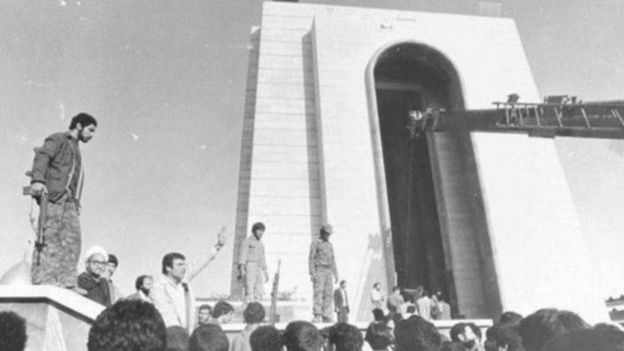
What had once been a towering monument became a pile of broken marble, brick, and defaced inscriptions.
Today, no public, identifiable gravesite exists for Reza Shah or for his mausoleum.
After its destruction, the site lay in ruins, and his physical remains were never publicly confirmed.
A potential discovery in 2018 reopened questions, but no official acknowledgment has clarified whether the mummified body found was indeed his.
At present, Reza Shah Pahlavi’s final resting place is most likely the unmarked ground in Ray, where his mausoleum once stood.
Empty to the public eye.
Known perhaps only to a few.